

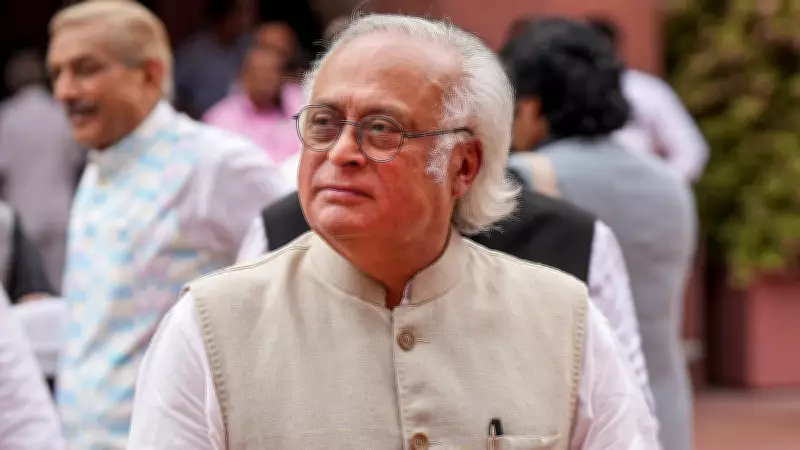
Jairam Ramesh Lauds Nehru's Legacy as 'Extraordinary Institution Builder'
Congress leader Jairam Ramesh has publicly praised India's first Prime Minister, Jawaharlal Nehru, describing him as an "extraordinary institution builder" whose contributions laid the foundation for modern India. In a recent statement, Ramesh emphasized Nehru's role in establishing key democratic and judicial institutions that continue to shape the nation today.
Historic Apology Letter to Supreme Court Justice Cited
To underscore Nehru's commitment to democratic norms and judicial respect, Ramesh referenced a notable historical document: a personal apology letter written by Nehru to Supreme Court Justice Vivian Bose. This letter, dated from Nehru's tenure, highlights a moment of accountability and humility in India's political history.
In the letter, Nehru expressed deep regret for remarks he made during a press conference in Delhi, stating, "I should like to express personally to you my deep regret at the remarks I made in this connection at the press conference I addressed in Delhi." This gesture is seen as a testament to Nehru's respect for the judiciary and his willingness to acknowledge mistakes, reinforcing the principles of separation of powers.

Nehru's Enduring Impact on India's Institutional Framework
Ramesh's comments come at a time when discussions about India's democratic institutions are prominent. He pointed out that Nehru's leadership was instrumental in:
- Establishing the Planning Commission and other economic bodies to guide post-independence development.
- Strengthening the Supreme Court and promoting an independent judiciary.
- Fostering educational and scientific institutions like the IITs and ISRO.
- Upholding democratic values through actions such as the apology to Justice Bose, which set a precedent for political accountability.
This reference to the apology letter serves as a reminder of Nehru's nuanced approach to governance, where he balanced strong leadership with a respect for constitutional propriety. The incident involving Justice Bose is often cited in historical analyses as an example of how Nehru navigated the complexities of India's early democracy.
Context and Relevance in Contemporary Politics
Ramesh's praise for Nehru is part of a broader political discourse, as leaders across parties often invoke historical figures to underscore their ideological stances. By highlighting Nehru's institution-building efforts and his apology to a judge, Ramesh aims to reinforce the Congress party's legacy and its commitment to democratic institutions.
Experts note that such references are significant in today's political climate, where debates about judicial independence and executive accountability are frequent. Nehru's letter to Justice Bose is viewed as a historical benchmark for how leaders should interact with the judiciary, emphasizing transparency and respect.
As India continues to evolve, the foundations laid by figures like Nehru remain a point of reference for discussions on governance and democracy. Ramesh's remarks underscore the enduring relevance of Nehru's contributions, particularly in an era where institutional integrity is a key concern for citizens and policymakers alike.






