

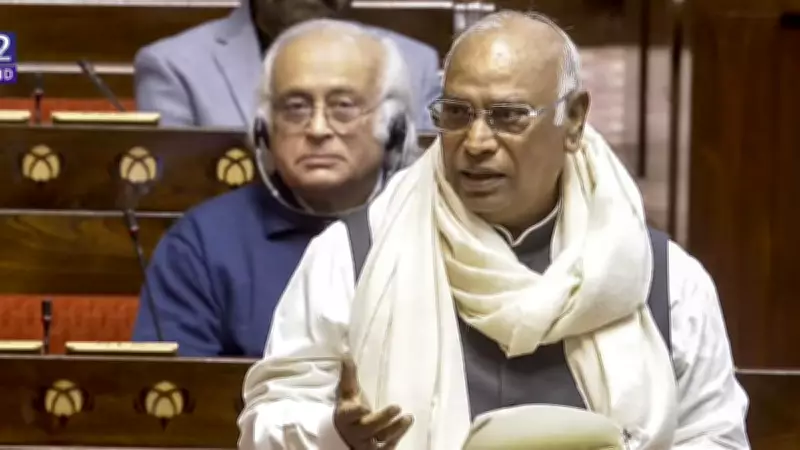
Congress Leader Mallikarjun Kharge Launches Scathing Attack on PM Modi's Parliamentary Conduct
In a sharp critique of Prime Minister Narendra Modi's recent parliamentary address, Congress President Mallikarjun Kharge has accused the PM of lacking the courage to answer questions posed to him directly. Speaking to reporters on Thursday, Kharge delivered a pointed assessment of Modi's performance during the discussion on the Motion of Thanks to the President's address.
"Repeating Falsehoods Has Been Modi's Job": Kharge's Direct Accusation
Kharge did not mince words when characterizing the Prime Minister's approach. "Repeating falsehoods has been Modi's job," the veteran Congress leader stated unequivocally. This accusation forms the core of Kharge's criticism, suggesting a pattern of behavior rather than an isolated incident in parliamentary proceedings.
The context for these remarks was Modi's extensive 97-minute reply to the parliamentary discussion. According to Kharge, despite the considerable length of the address, the Prime Minister "didn't say anything important or necessary." This assessment implies that the lengthy speech failed to address substantive issues or provide meaningful responses to opposition concerns raised during the debate.

Analysis of the 97-Minute Parliamentary Reply
The Motion of Thanks to the President's address represents a significant parliamentary tradition where the government outlines its vision and responds to opposition critiques. Kharge's comments suggest a fundamental dissatisfaction with how the Prime Minister engaged with this democratic process:
- Avoidance of Direct Questions: Kharge emphasized that Modi demonstrated unwillingness to confront specific questions raised by opposition members
- Substance Over Duration: Despite the nearly two-hour speech, Kharge argued it lacked meaningful content or necessary information
- Pattern of Communication: The accusation of "repeating falsehoods" suggests Kharge views this as characteristic of Modi's parliamentary approach
Political Context and Implications
This criticism emerges within India's vibrant democratic landscape where parliamentary debates serve as crucial accountability mechanisms. Kharge's remarks highlight ongoing tensions between the ruling party and opposition regarding parliamentary discourse standards. The Congress President's characterization of the Prime Minister's approach raises questions about:
- The nature of executive accountability in parliamentary proceedings
- The quality of debate and response during significant parliamentary discussions
- The opposition's role in holding the government to account through questioning
Kharge's comments represent more than routine political criticism; they frame a specific critique of democratic engagement at the highest levels of government. By focusing on the Prime Minister's alleged unwillingness to answer questions directly, the Congress leader positions this as a matter of democratic principle rather than mere political disagreement.
The timing of these remarks, following the extended parliamentary session, ensures they will contribute to ongoing political discourse about governance, accountability, and the quality of democratic debate in India's legislative processes.






