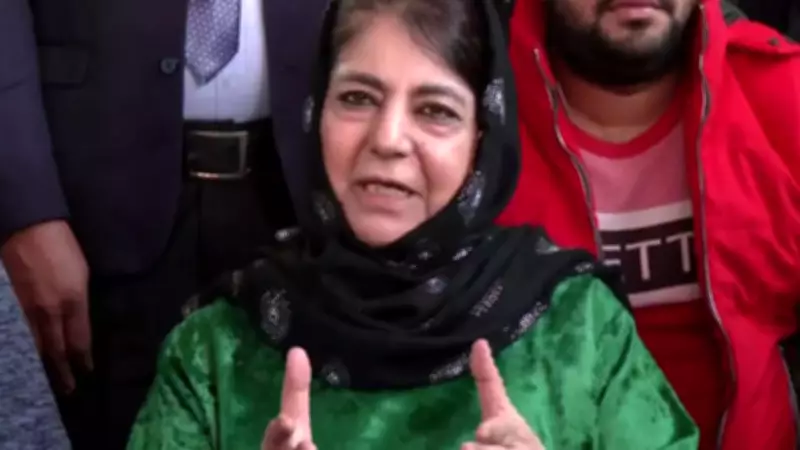
PDP Chief Mehbooba Mufti Criticizes PM Modi's Israel Visit as Contrary to India's Policy
In a significant political statement, Peoples Democratic Party (PDP) chief Mehbooba Mufti has strongly criticized Prime Minister Narendra Modi's recent visit to Israel, asserting that it runs contrary to India's long-standing policy of maintaining a moral and balanced position in global affairs. The former Jammu and Kashmir chief minister expressed her concerns to reporters in Srinagar, highlighting what she perceives as a deviation from traditional diplomatic norms.
International Community Distancing from Israel
Mehbooba Mufti emphasized that much of the international community has distanced itself from Israeli Prime Minister Benjamin Netanyahu following the International Criminal Court's indictments against him. "The prime minister should not be seen embracing such leaders," she stated firmly, suggesting that such diplomatic engagements could compromise India's principled stance on international justice and human rights.
CPM MLA MY Tarigami Voices Opposition
Adding to the criticism, Communist Party of India (Marxist) MLA MY Tarigami posted a party statement on social media platform X, condemning the timing of the visit. The statement pointed out that the visit came at a time when Israel was "killing scores of innocent people" in Gaza, raising questions about the appropriateness of high-level diplomatic engagements during ongoing conflicts.

NC MP Aga Syed Ruhullah Mehdi's Strong Rebuke
Srinagar MP Aga Syed Ruhullah Mehdi emerged as the lone functionary of the governing National Conference to publicly oppose the visit. In a sharp response to Prime Minister Modi's statement that he carried the "greetings of 1.4 billion Indians," Mehdi took to social media with a powerful rebuttal. "No, not my greetings. Give them my curses for their illegal occupation of Palestine and the genocide in Gaza," he declared, reflecting deep-seated concerns about the humanitarian situation in the region.
Broader Implications for India's Foreign Policy
The criticism from these political figures underscores broader debates about India's evolving foreign policy approach. Key points of contention include:
- The alignment of diplomatic visits with international legal proceedings
- The moral dimensions of engaging with leaders facing ICC indictments
- The balance between strategic partnerships and humanitarian concerns
- The representation of diverse Indian perspectives in foreign policy decisions
These developments highlight how domestic political voices are increasingly scrutinizing India's international engagements, particularly regarding sensitive geopolitical issues like the Israel-Palestine conflict. The statements from Kashmir-based leaders add regional dimensions to the national discourse, reflecting concerns about how such diplomatic moves might impact India's global standing and moral authority.