President Droupadi Murmu Unveils Bust of C. Rajagopalachari at Rashtrapati Bhavan
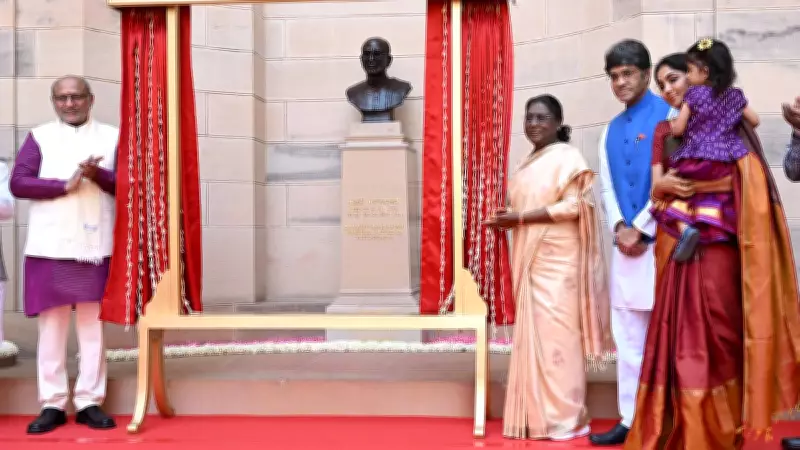
In a significant ceremony held at the iconic Rashtrapati Bhavan, President Droupadi Murmu unveiled a bronze bust of Chakravarti Rajagopalachari, widely recognized as India's first Indian Governor-General. This event marks a profound tribute to one of the nation's most esteemed leaders, whose contributions have left an indelible mark on India's historical and political landscape.
Honoring a Key Figure in Indian History
The unveiling ceremony was attended by dignitaries, historians, and officials, who gathered to commemorate Rajagopalachari's legacy. Known affectionately as Rajaji, he served as the last Governor-General of India from 1948 to 1950, following Lord Mountbatten, and played a crucial role during the transitional period post-independence. His tenure was instrumental in shaping the early administrative framework of the newly independent nation.
President Murmu, in her address, highlighted Rajagopalachari's multifaceted contributions, not only as a statesman but also as a freedom fighter, writer, and philosopher. She emphasized how his leadership and vision helped navigate India through its formative years, laying the groundwork for democratic governance and national integration.

Symbolic Significance of the Bust
The bronze bust, crafted by a renowned sculptor, stands as a permanent memorial within the premises of Rashtrapati Bhavan, symbolizing the enduring respect for Rajagopalachari's service. This installation serves as an educational tool for future generations, reminding them of the sacrifices and achievements of India's founding figures.
Historians note that Rajagopalachari was a close associate of Mahatma Gandhi and Jawaharlal Nehru, and his policies often reflected a blend of traditional values and modern governance. His efforts in promoting social reforms, education, and economic self-reliance continue to inspire contemporary leaders and policymakers.
Broader Implications for National Heritage
This event underscores the government's commitment to preserving and celebrating India's rich historical heritage. By honoring figures like Rajagopalachari, it reinforces the importance of remembering and learning from the past to build a stronger future. The bust's placement at Rashtrapati Bhavan, the seat of the Indian presidency, adds a layer of national pride and continuity.
In recent years, there has been a renewed focus on commemorating lesser-known heroes and milestones in Indian history, with similar initiatives aimed at educating the public and fostering a sense of unity. This unveiling aligns with those efforts, providing a tangible connection to the nation's journey towards sovereignty and progress.
As India continues to evolve, such tributes play a vital role in maintaining a collective memory and inspiring citizens to contribute to the nation's growth. The ceremony concluded with a moment of reflection, as attendees paid homage to Rajagopalachari's enduring legacy and the values he championed throughout his life.