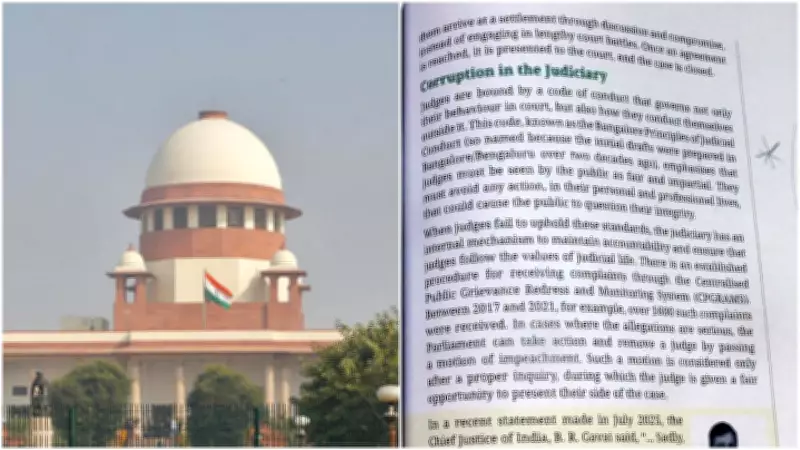
NCERT Faces Criticism Over Textbook Content on Judicial Corruption
In a recent development, the National Council of Educational Research and Training (NCERT) has been strongly rebuked by government sources for including a section on corruption in the judiciary within a social science textbook. The criticism centers on the selective focus of the content, which has sparked debate over educational materials and their portrayal of governance institutions.
Government Sources Question Textbook Approach
According to government insiders, the issue of corruption, if addressed in educational resources, should encompass all three organs of the state: the executive, the judiciary, and the legislature. They emphasized that a balanced perspective is crucial to avoid bias and ensure comprehensive understanding among students. The sources stated that NCERT should have applied their minds more carefully when designing this section, highlighting the need for inclusivity in discussing systemic challenges.
The controversy arose after the textbook section was published, drawing attention to how corruption is presented in educational contexts. Government officials argue that singling out the judiciary without similar scrutiny of the executive and legislature could lead to misconceptions and undermine public trust in judicial institutions.

Broader Implications for Educational Content
This incident raises important questions about the role of NCERT in shaping curriculum and the responsibilities involved in addressing sensitive topics like corruption. Key points include:
- Balanced Representation: Educational materials should provide a holistic view of governance, covering all branches equally to foster critical thinking.
- Educational Integrity: NCERT's decisions impact millions of students, necessitating thorough review and consideration of content implications.
- Public Discourse: The debate highlights ongoing discussions about transparency and accountability in India's democratic framework.
As the situation unfolds, stakeholders are calling for revisions to ensure textbooks align with principles of fairness and accuracy. The focus remains on how educational institutions can effectively address complex issues while maintaining educational standards and public confidence.