

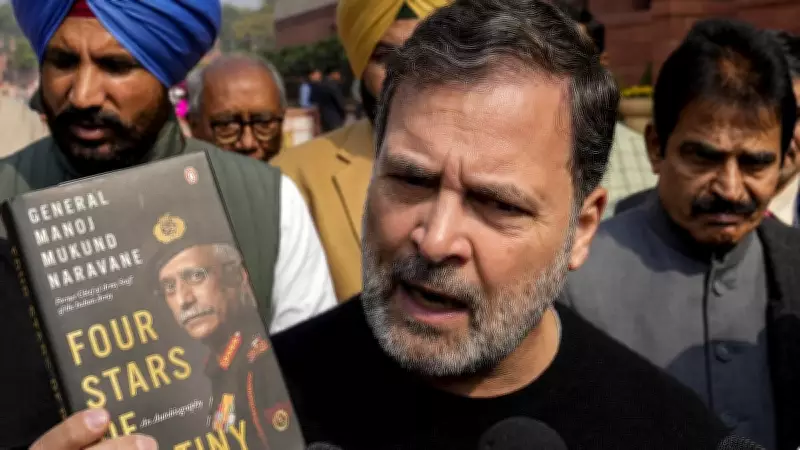
Political Storm Erupts Over Investigation into General Naravane's Memoir Circulation
Delhi Police has officially confirmed the initiation of a formal investigation into the alleged availability and circulation of a pre-print copy of former Army Chief General Manoj Mukund Naravane's highly anticipated memoir. This development has ignited a fierce political controversy, with opposition parties launching sharp criticism against the probe while the ruling Bharatiya Janata Party (BJP) escalates the confrontation by calling for breach of privilege proceedings against Congress leader Rahul Gandhi.
Details of the Delhi Police Investigation
According to senior Delhi Police officials, a comprehensive investigation has been taken up following credible claims regarding the unauthorized distribution of a pre-publication version of General Naravane's book. The probe aims to determine the source of the leak, the channels through which the manuscript was circulated, and whether any sensitive or classified information was compromised in the process. Police sources indicate that the investigation is currently in its preliminary stages, with forensic and digital analysis being conducted to trace the origins of the leaked material.
Opposition's Strong Criticism of the Probe
Multiple opposition parties have united in their condemnation of the police investigation, labeling it as politically motivated and an attempt to stifle legitimate discourse. Leaders from the Congress, Trinamool Congress, and other regional parties have argued that the probe represents an overreach of authority and an infringement on freedom of expression. They contend that the focus should be on addressing substantive national issues rather than pursuing what they describe as a trivial matter orchestrated to divert public attention.

- Allegations of the investigation being used as a tool for political vendetta
- Concerns about the chilling effect on military historians and authors
- Questions about the timing and necessity of police involvement in a literary matter
BJP's Demand for Breach of Privilege Action Against Rahul Gandhi
In a significant escalation, the Bharatiya Janata Party has formally demanded that breach of privilege proceedings be initiated against Rahul Gandhi. BJP leaders allege that Gandhi's comments and actions regarding the memoir controversy have undermined parliamentary decorum and constituted a serious violation of privilege. They argue that his statements have deliberately misrepresented facts and attempted to influence an ongoing investigation, thereby obstructing the functioning of democratic institutions.
The BJP's move has added a constitutional dimension to the political clash, with party spokespersons emphasizing the need to uphold parliamentary norms and prevent what they characterize as irresponsible behavior by opposition leaders. This demand has further polarized the political landscape, setting the stage for a potentially protracted parliamentary battle.
Broader Implications for Indian Politics
This controversy surrounding General Naravane's memoir has evolved into a multifaceted political confrontation with several layers of significance:
- Civil-Military Relations: The incident raises questions about the appropriate boundaries between military affairs and political discourse.
- Freedom of Information: It highlights ongoing debates about transparency, confidentiality, and the public's right to information regarding historical accounts.
- Political Strategy: Both the ruling party and opposition appear to be using the issue to galvanize their respective support bases ahead of upcoming electoral challenges.
- Institutional Integrity: The involvement of multiple institutions—police, parliament, and political parties—demonstrates how such controversies can test the resilience of India's democratic framework.
As the investigation progresses and political rhetoric intensifies, this episode is likely to remain a focal point of national debate, reflecting deeper tensions within India's political ecosystem. The outcome could influence not only immediate political dynamics but also establish precedents for how similar controversies are handled in the future.






