

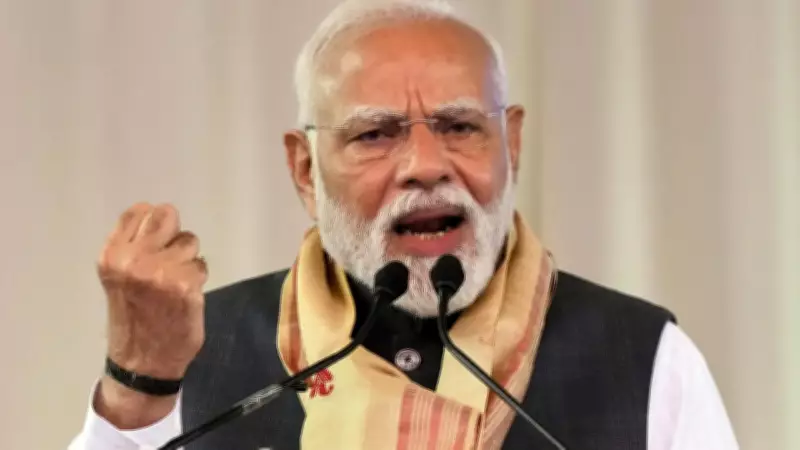
Prime Minister Modi Charts India's Reform Course for Next Decade
In a comprehensive interview with PTI on Sunday, Prime Minister Narendra Modi detailed India's strategic reform priorities for the coming ten years, emphasizing that structural reforms, deeper innovation, and simpler governance will be crucial to achieving the vision of a "Viksit Bharat" or developed India.
Three Pillars of Future Growth
When asked about the key reform priorities for the next decade, PM Modi identified three fundamental areas: more structural reforms, deeper innovation, and simpler governance. He explained that India's growth story is being fundamentally reshaped by transformative changes in both governance structures and economic policy frameworks.
The Prime Minister highlighted that the next phase of India's development will require sustained reform momentum, bold private sector investment, and continued focus on infrastructure and digital transformation. He stressed that maintaining this forward trajectory is essential for long-term national progress.

Digital Leadership and Data Infrastructure
PM Modi pointed to India's remarkable digital transformation as evidence of successful reforms, particularly citing the Unified Payments Interface (UPI) platform. "India is a digital leader in the world made possible by fundamental reforms in how people transact via the UPI platform," he stated.
Looking ahead, the Prime Minister emphasized the growing importance of data infrastructure, declaring that data centers will become massive job creators for Indian youth. He extended an invitation to the global community, saying "we invite the whole world's data to reside in India," positioning the country as a future hub for data management and storage.
Unprecedented Infrastructure Expansion
On the infrastructure front, PM Modi described India as witnessing "the most expansive infrastructure push in its history." He emphasized that this development is being executed with future readiness in mind, with infrastructure projects specifically planned to address long-term national needs rather than short-term requirements.
The Prime Minister identified productive capital expenditure as a hallmark of his government's approach, noting that the latest Union Budget deliberately avoided short-term populism. Instead, it prioritized record capital outlays designed to create sustainable employment opportunities and strengthen India's long-term growth foundations.
Global Integration and Economic Resilience
PM Modi pointed to India's improving global competitiveness, noting that goods exports have repeatedly broken previous records in recent years. This performance reflects both enhanced competitiveness and deeper global integration of the Indian economy.
"Our national character has revealed itself even in challenging times; we are a bright growth spot in difficult global circumstances," he said, highlighting India's economic resilience amid worldwide uncertainty. This resilience, according to the Prime Minister, positions India favorably for continued growth.
Trade Policy and Private Sector Role
Regarding trade policy, PM Modi explained that India's free trade agreements are specifically designed to expand market access for micro, small, and medium enterprises (MSMEs). He identified several key sectors that stand to benefit, including:
- Textiles
- Leather goods
- Chemicals
- Handicrafts
- Gems and jewelry
The Prime Minister stressed that the next leap toward a developed India will depend significantly on private sector participation. "The next leap to Viksit Bharat will depend on bold investment by the private sector in innovation, long-term capacity, and global competitiveness," he asserted.
Women's Role and Long-Term Vision
PM Modi also emphasized the critical role of women in India's development journey, stating with conviction that "women will play the most important role in creating Viksit Bharat." This recognition of gender inclusion as a development driver represents a significant aspect of the government's broader vision.

Framing the current policy direction within a larger temporal context, the Prime Minister suggested that today's reforms and investments are laying the foundation for India's sustained growth over the next quarter-century. The strategic initiatives being implemented now, he indicated, are designed to prepare the nation for long-term success rather than merely addressing immediate concerns.
This comprehensive vision articulated by Prime Minister Modi outlines a clear roadmap for India's development over the coming decade, balancing immediate economic priorities with long-term strategic goals while emphasizing digital transformation, infrastructure development, and inclusive growth as key pillars of progress.





