

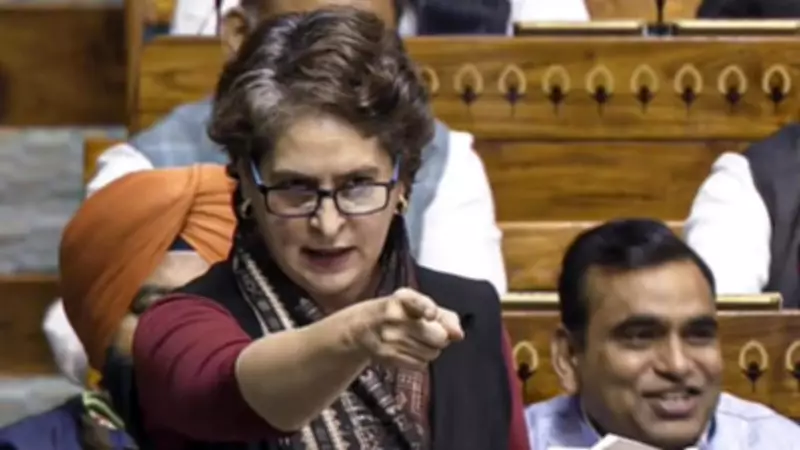
Priyanka Gandhi Vadra Counters Kiren Rijiju's Allegations of Parliamentary Misconduct
In a sharp rebuttal to accusations made by Union Minister Kiren Rijiju, Congress leader Priyanka Gandhi Vadra has firmly denied any instances of abuse or misbehavior by her party's Members of Parliament during recent parliamentary sessions. The political confrontation highlights the ongoing tensions between the ruling Bharatiya Janata Party and the opposition Congress in India's legislative arena.
Rijiju's Claims of Incitement by Congress Leadership
Kiren Rijiju, a prominent BJP figure, had earlier alleged that Congress MPs were actively encouraged by their party leaders to engage in disruptive behavior. "They (the Congress MPs) were egging them on. Had our MPs misbehaved with anyone, our leader would stop them. But their (Congress') leaders were egging on the MPs to quarrel," Rijiju stated, implying a deliberate strategy of provocation from the opposition benches.
These remarks were made in the context of heated debates and procedural disruptions that have occasionally marred parliamentary proceedings, with both sides frequently trading accusations of misconduct and obstructionism.

Gandhi's Firm Denial and Defense of Congress Conduct
Responding directly to these allegations, Priyanka Gandhi Vadra asserted that no abuse or inappropriate behavior took place from Congress parliamentarians. "We did not abuse anyone," she emphasized, challenging the veracity of Rijiju's claims. Her statement underscores a commitment to maintaining decorum while vigorously opposing government policies through legitimate parliamentary means.
Gandhi further suggested that such accusations might be politically motivated, aimed at deflecting attention from substantive policy issues or undermining the opposition's credibility. This exchange occurs against a backdrop of significant legislative discussions where partisan clashes have sometimes overshadowed policy debates.
Broader Implications for Indian Parliamentary Democracy
The public spat between two high-profile political figures raises important questions about parliamentary conduct and political discourse in India:
- Accountability and Transparency: Both parties are now under scrutiny to substantiate their claims with evidence, potentially affecting public trust in parliamentary institutions.
- Opposition Role: The incident highlights the challenges faced by opposition parties in holding the government accountable while navigating accusations of obstructionism.
- Political Strategy: Such exchanges may influence upcoming electoral strategies and public perceptions of party discipline and leadership.
As the controversy unfolds, it remains to be seen whether formal complaints or evidence will be presented to parliamentary ethics committees, or if the matter will dissolve into the broader political rhetoric that characterizes much of contemporary Indian politics.






