Rahul Gandhi Steps Up Criticism of PM Modi, Links Trade Deal to Alleged Pressure Points
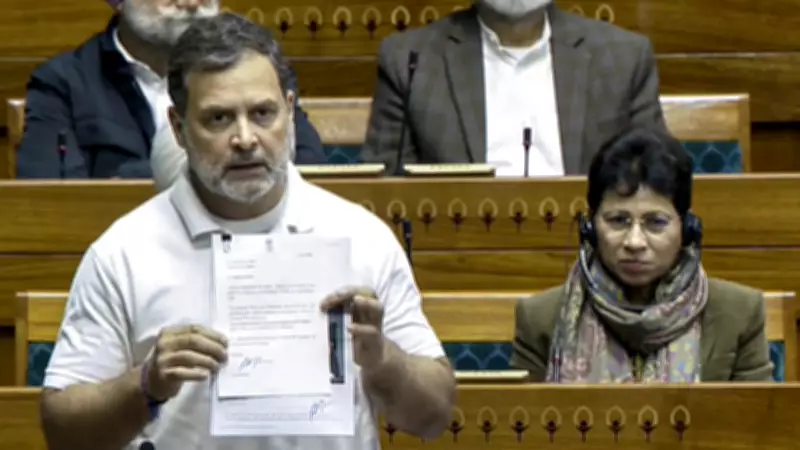
Congress MP and Leader of Opposition Rahul Gandhi on Tuesday escalated his political offensive against Prime Minister Narendra Modi, directly connecting the recently signed India–US trade agreement to what he described as "two significant pressure points" affecting the Prime Minister.
Allegations of External Pressure and Compromise
Speaking to journalists outside Parliament, Rahul Gandhi asserted that Prime Minister Modi is "under substantial pressure" due to two specific international developments. "There exists a legal case against industrialist Gautam Adani in United States courts," he stated. "They are not merely targeting Adani; they are targeting the financial framework behind Prime Minister Modi. The second issue involves the unreleased material from the Jeffrey Epstein files, which the American authorities have not yet made public, creating additional pressure on our Prime Minister."
Rahul Gandhi elaborated further, claiming, "The Adani case is essentially a case against PM Modi because he represents the financial structure supporting both the Prime Minister and the BJP. These constitute two critical pressure points influencing his decisions."

Accusations of National Compromise in Trade Agreement
The Congress leader went on to accuse the Prime Minister of "being fundamentally compromised" and "effectively selling the nation" through the terms of the India–US trade deal. "Modi ji appears visibly rattled," he declared. "The US–India trade agreement, which had been stalled for several months, was unexpectedly signed by Narendra Modi last night. This indicates extreme pressure upon him. Narendra Modi ji's carefully cultivated image faces potential damage. The core issue is that our Prime Minister is compromised, and the public must seriously contemplate this reality."
He added a procedural grievance, noting, "For the first time, the Leader of the Opposition was denied the opportunity to speak during the discussion on the President's address, which is deeply concerning."
In stronger terms, Rahul Gandhi alleged, "Narendra Modi ji has traded away your hard-earned efforts in this trade deal precisely because he is compromised. He has sold the country. Narendra Modi ji is frightened because the very individuals who helped build his public image are now actively dismantling it."
Government Rebuttal and Trade Deal Details
Earlier, the Ministry of External Affairs had firmly rejected any insinuations linking Prime Minister Modi to the Epstein files. Official spokesperson Randhir Jaiswal dismissed such references beyond the Prime Minister's 2017 visit to Israel as "trashy ruminations of a convicted criminal," clearly distancing the government from the allegations.
The political controversy follows the formalization of the India–US trade pact, which reportedly reduces tariffs on specific Indian exports to the United States from 25% down to 18%. The Congress party has formally demanded complete transparency and the full disclosure of the agreement's details. Their concerns reportedly include:
- Questions regarding claims about opening India's agricultural sector to greater foreign access.
- Calls from US negotiators for tariffs to be reduced to "zero" on certain items.
- A potential pause on purchases of Russian oil, as previously suggested by former US President Donald Trump.
The exchange marks a significant escalation in political rhetoric, with the opposition directly challenging the government's motives behind a major international economic agreement and framing it within a narrative of external pressure and personal compromise.