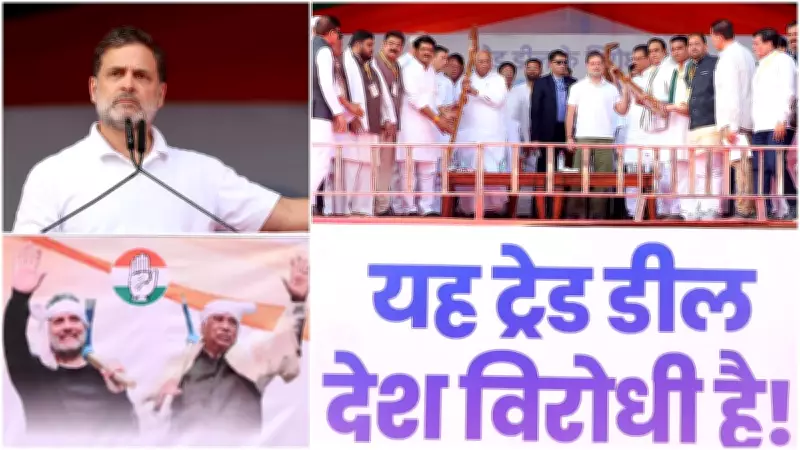
Rahul Gandhi Accuses PM Modi of Inability to Cancel US Trade Deal
In a fiery address at a farmers' rally, Congress leader Rahul Gandhi launched a sharp critique against Prime Minister Narendra Modi, daring him to cancel the proposed trade deal with the United States. Gandhi asserted that Modi is incapable of taking such a step due to immense pressure exerted on him, highlighting a contentious issue in India's foreign and economic policy.
Claims of Stalled Negotiations and Widespread Opposition
Rahul Gandhi elaborated that the trade deal has been stalled for approximately four months, attributing the delay to significant resistance from multiple quarters. According to his statements, farmers, farm workers, and even the government itself are opposed to the agreement, creating a deadlock in negotiations. This opposition, he suggested, reflects broader concerns about the deal's impact on agricultural sectors and domestic interests.
The political confrontation underscores ongoing tensions between the ruling BJP and opposition parties over trade policies. Gandhi's remarks come amid heightened scrutiny of India's trade relations with the US, a key partner in global commerce. By framing the issue around farmer welfare, he aims to galvanize support from agricultural communities, a critical voter base in Indian politics.

Broader Implications for India-US Relations
The India-US trade deal has been a focal point of diplomatic discussions, with potential implications for bilateral trade, investment, and strategic ties. Rahul Gandhi's allegations add a political dimension to these talks, suggesting that domestic pressures are hindering progress. This development raises questions about the government's ability to navigate complex international agreements while addressing internal dissent.
Analysts note that such statements could influence public perception and policy debates, as trade deals often involve balancing economic benefits with social and agricultural concerns. The mention of Jeffrey Epstein in the original context, though not elaborated, hints at broader geopolitical or controversial elements that might be intertwined with the discussion, though it remains peripheral to the core trade issue.
Political Ramifications and Future Outlook
Rahul Gandhi's rally speech is part of a broader strategy to challenge the Modi administration on various fronts, from governance to international agreements. By highlighting the trade deal's stall and alleged pressure on the PM, he seeks to portray the government as weak or compromised in its decision-making.
- The trade deal's future remains uncertain, with ongoing negotiations likely to face further scrutiny.
- Farmer protests and opposition voices could intensify, shaping the political landscape ahead of upcoming elections.
- International observers are watching closely, as India's trade policies impact global markets and partnerships.
As the debate unfolds, stakeholders from agriculture, industry, and politics will continue to weigh in, making this a pivotal issue in India's economic and diplomatic agenda. The government's response to these allegations will be crucial in determining the trajectory of both domestic politics and foreign trade relations.