

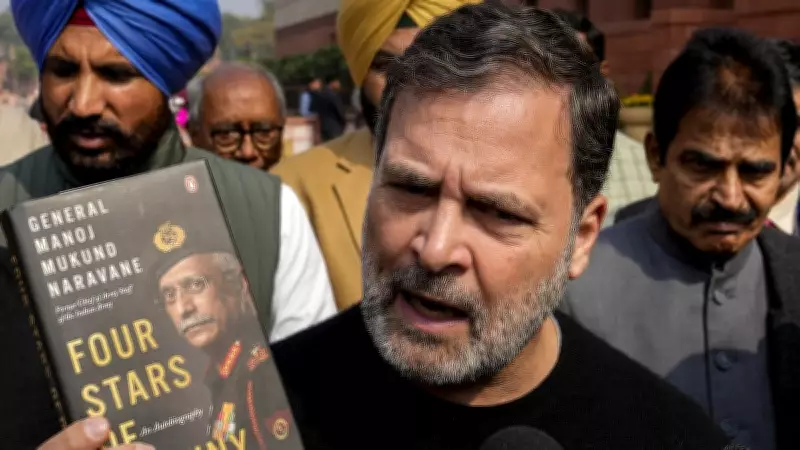
Political Storm Erupts Over Rahul Gandhi's Possession of Unpublished Military Memoir
The political landscape in India has been stirred by revelations that Congress leader and Leader of Opposition Rahul Gandhi obtained a hard copy of former Army Chief General M.M. Naravane's unpublished book. The memoir, originally scheduled for release in 2024, had already generated significant anticipation among readers, with bookstores accepting pre-orders and online platforms facilitating advance bookings. However, the planned launch was abruptly halted, leading to widespread speculation and debate.
Allegations of Government Censorship and International Availability
Rahul Gandhi has publicly accused the Modi government of preventing the book's publication within India. In a statement posted on social media by the Congress party, Gandhi asserted, "The book is available abroad. It's published abroad. The Modi government is not allowing it to be published here." This claim has fueled discussions about potential censorship and the freedom of expression in the country.
The controversy deepened when Penguin India, the book's publisher, issued an official statement on February 9, 2026, addressing the situation. While the specifics of their response were not detailed in the initial reports, it indicated the publisher's involvement in the unfolding narrative. Adding to the complexity, General Naravane himself had previously announced the availability of his book in December 2023, sharing a link for access and expressing his hopes for happy reading with a patriotic sign-off.

Timeline of Events and Key Players
The timeline of events reveals a multi-layered story. In December 2023, General Naravane promoted his book as available, suggesting an early release or alternative distribution method. By February 2026, the book's formal launch in India was stalled, with Rahul Gandhi highlighting its international availability and alleging governmental interference. The publisher's statement and Gandhi's possession of a physical copy have raised questions about how the unpublished material circulated.
This incident touches on several critical issues, including political transparency, military disclosures, and publishing rights. It has become a focal point for opposition criticism against the government, with implications for India's democratic processes and media freedom. The involvement of high-profile figures like Rahul Gandhi and General Naravane ensures continued public and media scrutiny as more details emerge.






