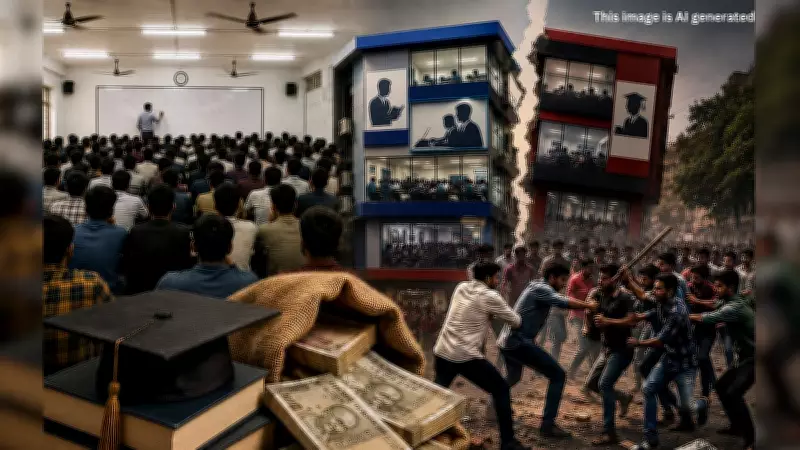
The commercialization of education has given rise to what many are calling the 'Shiksha Mafia' — a system where education is treated as commerce and students as mere consumers. Advertising, financial investment, and institutional rivalry have begun to overshadow the more important goals of nurturing knowledge, developing critical thinking, and expanding opportunities for young people.
The Rise of the Shiksha Mafia
In recent years, the education sector has witnessed a troubling shift. Instead of focusing on holistic development, institutions are increasingly driven by profit motives. Aggressive marketing campaigns, hefty investments in branding, and cutthroat competition for student enrollment have become the norm. This trend, often referred to as the 'Shiksha Mafia,' prioritizes revenue over learning outcomes.
Students as Consumers
When students are treated as consumers, the educational experience is commodified. Institutions vie for attention through flashy advertisements and promises of high returns on investment, such as lucrative job placements. However, this approach often sidelines critical thinking and genuine knowledge acquisition. Students are left with a transactional view of education, where degrees are seen as commodities rather than tools for personal and societal growth.

Impact on Educational Goals
The true purpose of education — to nurture curious minds, foster creativity, and build a foundation for lifelong learning — is being eroded. Institutional rivalry leads to a focus on rankings and reputation rather than the quality of teaching and research. This commercialization also widens inequality, as only those who can afford premium services gain access to better opportunities.
Way Forward
To combat the Shiksha Mafia, there is a need for stricter regulations on advertising and fee structures, as well as a renewed emphasis on pedagogical values. Parents, students, and educators must advocate for an education system that prioritizes learning over profit. Only then can we restore the true essence of education as a public good rather than a marketplace.