

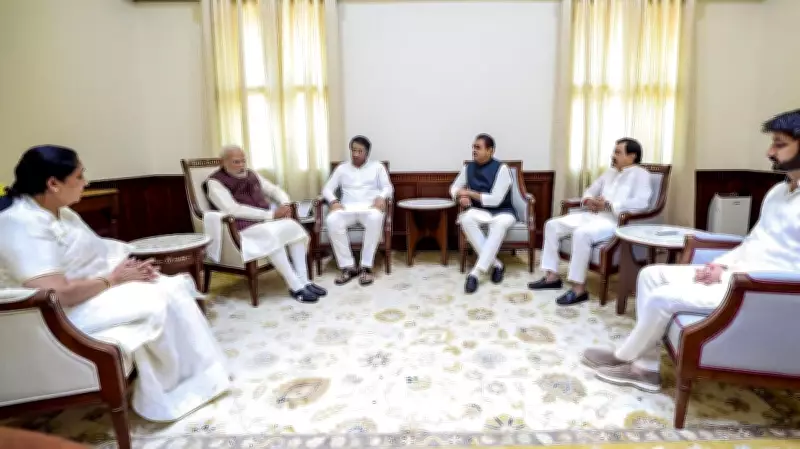
Sunetra Pawar Meets Top Leadership After Assuming Ministerial Charge
In a significant political development, Sunetra Pawar has formally taken charge of her office and key ministries, followed by a high-profile visit to New Delhi where she met with Prime Minister Narendra Modi and Home Minister Amit Shah. This sequence of events has sparked intense speculation about a potential reunion within the Nationalist Congress Party (NCP), adding a new dimension to the ongoing political landscape in India.
Formal Assumption of Ministerial Responsibilities
On Tuesday, Sunetra Pawar officially assumed her duties, marking a crucial step in her political career. She has been entrusted with the following portfolios:
- State Excise Duty
- Sports and Youth Affairs
- Minorities Development and Aukaf
This move solidifies her role in the state government and underscores her growing influence within the party framework. The timing of her New Delhi visit, which occurred just one day after taking charge, highlights the strategic importance of this engagement at the national level.

High-Stakes Meetings in the Capital
The visit to New Delhi saw Sunetra Pawar engaging in discussions with two of the most powerful figures in Indian politics: Prime Minister Narendra Modi and Home Minister Amit Shah. These meetings are being closely watched by political analysts and party members alike, as they come amid persistent rumors of a possible NCP reunion.
The interactions are believed to have covered a range of topics, including governance, policy coordination, and the broader political scenario. While official statements have been limited, the mere occurrence of these talks has fueled conjecture about behind-the-scenes negotiations aimed at consolidating political alliances.
Buzz Over NCP Reunion Intensifies
The political buzz surrounding a potential NCP reunion has gained momentum following these developments. Key points of speculation include:
- Strategic Alignment: Observers suggest that Sunetra Pawar's meetings with Modi and Shah could signal efforts to bridge gaps and explore common ground on critical issues.
- Party Dynamics: The move is seen as a possible step toward reuniting factions within the NCP, which has experienced internal divisions in recent years.
- Future Implications: If a reunion materializes, it could reshape political equations at both the state and national levels, influencing upcoming electoral strategies.
This development underscores the fluid nature of Indian politics, where alliances and reunions often play a pivotal role in shaping governance and policy outcomes.
Context and Broader Political Landscape
Sunetra Pawar's actions come at a time when Indian politics is characterized by dynamic shifts and realignments. Her assumption of ministerial charge and subsequent high-level meetings reflect a proactive approach to navigating these complexities. The focus on excise duty, sports, youth affairs, and minorities development indicates a commitment to addressing diverse societal needs, while the political maneuvers suggest a keen awareness of the importance of strategic partnerships.
As the situation evolves, all eyes will be on further announcements and actions from the involved parties. The potential for an NCP reunion remains a topic of keen interest, with implications that could extend far beyond immediate political circles.






