

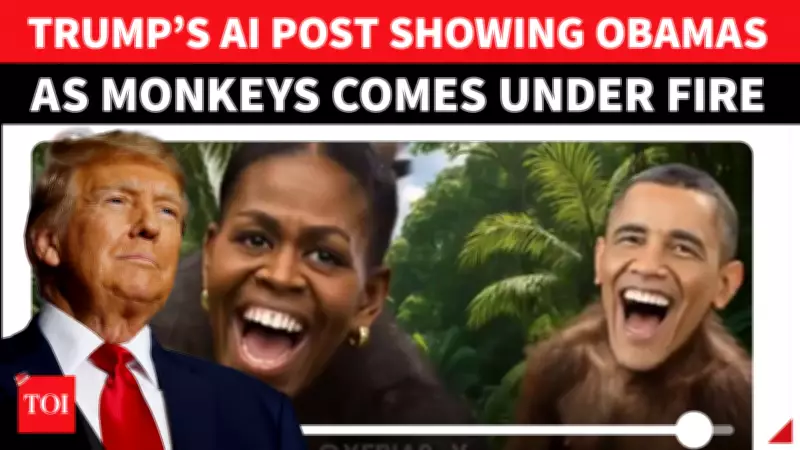
Trump's AI Video Depicting Obamas as Monkeys Ignites Political Firestorm
A massive political controversy has erupted following former President Donald Trump's decision to share an Artificial Intelligence-generated video on his Truth Social platform. The video, which has gone viral, depicts former President Barack Obama and former First Lady Michelle Obama as monkeys, sparking immediate and fierce condemnation from Democratic leaders and civil rights advocates.
Democrats Condemn 'Disgusting' and 'Racist' Act
Democratic officials and supporters have expressed outrage, labeling the video as "disgusting" and accusing Trump of engaging in blatant racism. The video, which also includes claims that the 2020 presidential election was stolen, has been widely criticized for its offensive and dehumanizing portrayal of the first African-American First Family in U.S. history.
This incident is not an isolated one in Trump's post-presidency. He has increasingly utilized AI technology to create and disseminate content mocking his political opponents. Last year, he shared another AI-generated video that showed Barack Obama being arrested in the Oval Office and later depicted in an orange jumpsuit behind bars, further fueling debates about the ethical use of such technology in political discourse.

Escalating Use of AI in Political Attacks
The rapid advancement and accessibility of AI tools have opened new avenues for political attacks, allowing for the creation of highly realistic but fabricated content. Trump's latest post underscores the growing trend of using deepfakes and manipulated media to influence public opinion and undermine adversaries.
Experts warn that such actions could set dangerous precedents, normalizing the use of racially charged and misleading content in political campaigns. The video's virality highlights the challenges platforms face in moderating AI-generated content that blurs the line between satire and harmful misinformation.
Broader Implications for Democracy and Social Cohesion
The backlash against Trump's video reflects deeper societal concerns about racism and the integrity of democratic processes. By targeting the Obamas in this manner, the video taps into historical and painful stereotypes, exacerbating racial divisions and polarizing the electorate.
As the 2026 political landscape continues to evolve, incidents like this raise critical questions about the role of technology in shaping political narratives. The Democratic response has been swift and unified, with calls for accountability and a reevaluation of how social media platforms handle politically sensitive and potentially harmful content.
The storm surrounding this AI video is likely to have lasting repercussions, influencing public discourse and potentially impacting future electoral dynamics. It serves as a stark reminder of the power of digital media to both inform and inflame, challenging citizens and policymakers alike to navigate an increasingly complex information environment.






