Chaos Erupts at Trump's State of the Union Address
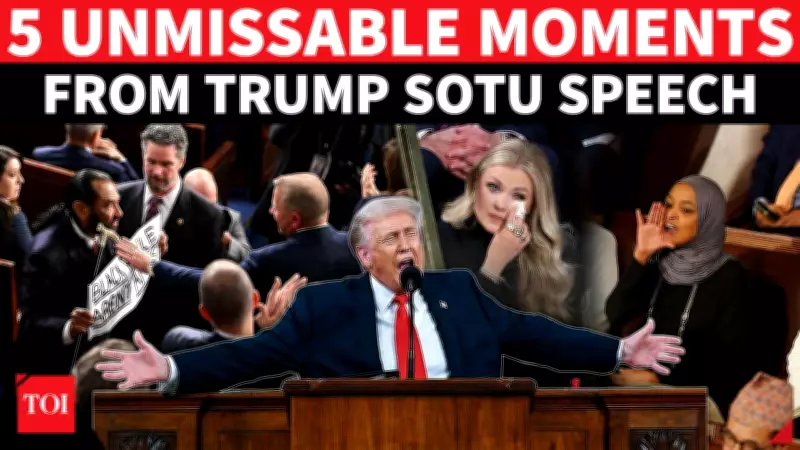
President Donald Trump's State of the Union speech on February 25, 2026, turned into a tumultuous event marked by intense clashes with Democratic lawmakers. The atmosphere in the House chamber grew increasingly heated as the President delivered his address, leading to several dramatic confrontations that captured national attention.
Heated Exchanges Over American Policies
During his speech, President Trump directly accused Democrats of refusing to support key American policies, blaming them for the high costs affecting the country. These accusations sparked immediate reactions from the opposition, setting the stage for a night of political discord. The President's remarks highlighted deep partisan divides, with tensions visibly escalating as he spoke.
Ilhan Omar's Vocal Protest
Adding to the chaos, Representative Ilhan Omar was seen shouting during the address, further intensifying the hostile environment on the House floor. Her vocal protest underscored the raw emotions and political friction that characterized the event, drawing widespread media coverage and public scrutiny.

Dramatic Ejection of Congressman Al Green
In one of the most striking moments of the evening, Democratic Congressman Al Green was escorted out of the chamber after raising a sign in protest. The sign read: “Black people aren’t apes,” a pointed statement that led to his removal by security personnel. This incident not only disrupted the proceedings but also highlighted underlying racial tensions within the political discourse.
Key Highlights of the Chaotic Address
- President Trump clashed with Democrats over policy support and economic costs.
- Representative Ilhan Omar heckled during the speech, fueling the heated atmosphere.
- Congressman Al Green was ejected after displaying a protest sign.
- The event showcased deep partisan divisions and political unrest in the US.
- Security interventions were required to manage the disruptions.
Broader Implications for US Politics
The chaotic State of the Union address reflects the ongoing polarization in American politics, with such public confrontations becoming more frequent. Analysts suggest that these incidents may influence upcoming political strategies and public perceptions, as both parties navigate a highly charged electoral landscape. The video of the event has since gone viral, prompting debates on decorum and democracy in legislative settings.