Routine Judicial Step, Not a Setback
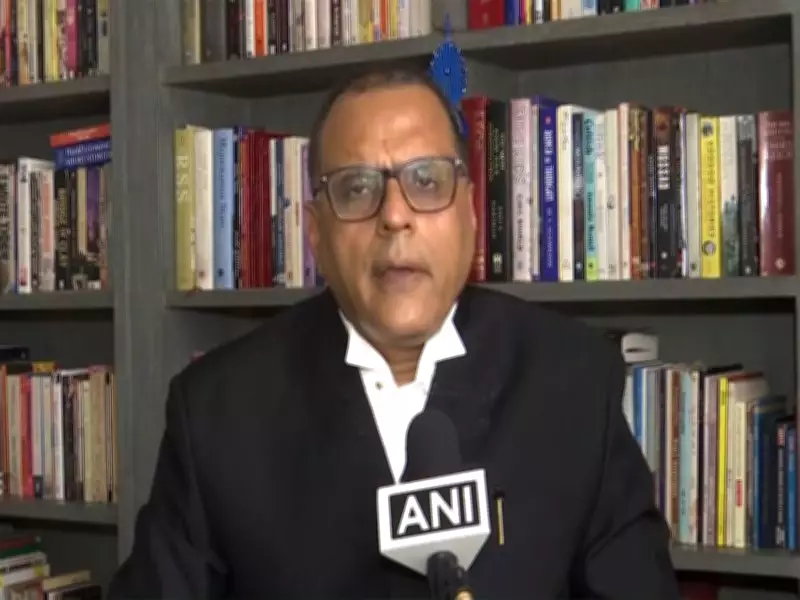
Senior Advocate Vikas Pahwa on Monday clarified that the recent order by US District Judge Nicholas Garaufis, requesting additional information from the US Department of Justice (DOJ) in the Adani case, is a standard procedural step and should not be interpreted as a setback to the government's motion to dismiss the indictment.
Speaking to ANI, Pahwa explained that the court merely sought supplementary material before issuing a final ruling and has scheduled the next hearing for July 13 after a brief adjournment. “This is a routine issue. The judge, while considering the application, has asked for some additional information and fixed the matter after a short interval. That is a completely normal judicial procedure,” he said.
Court Has Not Rejected DOJ's Request
Pahwa emphasized that the judge has not denied the DOJ's request to drop the indictment. Instead, the court followed standard legal protocol by issuing a notice and requesting further clarification. “The court has not rejected the application for cancellation of the indictment. It has only issued a notice, sought additional information and fixed the matter for July 13. Once the reply is filed, the court will consider it and pass an appropriate order,” he stated.

Legal Basis Under Rule 48(a)
Referring to Rule 48(a) of the US Federal Rules of Criminal Procedure, Pahwa noted that the discretion to seek dismissal of an indictment primarily rests with the government. “The government has the authority to seek dismissal of an indictment, subject to obtaining the leave of the court. That is exactly what has been done in this case,” he said.
While acknowledging that the court technically has the power to reject such a request, Pahwa stressed that this would occur only under exceptional circumstances. “The court can reject the application if it finds it to be completely baseless, collusive or against a significant public interest. But under normal circumstances, the chances of that happening are very, very bleak. The court's jurisdiction in such matters is extremely limited,” he added.
Proceedings Likely to Be Brief
Pahwa expressed optimism that the proceedings would not be prolonged. “If there was going to be any substantial delay, the court would have granted a much longer adjournment. Instead, it has fixed the matter within two weeks. Once the Department of Justice files its response, the court can proceed to pass an order. I do not think the process will take too long,” he said.
On whether the Adani Group should explore appellate remedies at this stage, Pahwa advised awaiting the court's decision first. “In my understanding, the parties should wait for the court's order. After that, if required, they can consider the legal remedies available to them,” he said.
Background of the Case
Earlier, Judge Garaufis instructed the Justice Department to provide a more comprehensive clarification regarding its petition to formally drop the indictment. The judge noted that the federal prosecutors' May 18 notification indicating they would no longer proceed with the case did not offer an adequate explanation for their decision to withdraw the matter.
The US DOJ had decided to permanently drop all criminal charges against Gautam Adani and Sagar Adani in an alleged securities and wire fraud case pending in New York, concluding that the allegations could not be sustained.
Adani Group's Defense
The Adani Group has consistently maintained that the case suffered from fatal flaws. In a letter to the Court dated June 24, 2026, the company highlighted that the transactions were conducted by non-US issuers and lenders, governed by English law, and fell outside the scope of US securities law under the Supreme Court's ruling in Morrison v. National Australia Bank.
Furthermore, the defense argued that the bribery allegations lacked substance, supported by expert testimony from a former senior Indian regulatory official, which indicated that the alleged payments were transparent price reductions rather than illegal inducements. Adani also noted that there were no investor losses, as all bond and loan obligations have been met or are in good standing.