The West Bengal government on Monday decided to scrap the existing sub-categorisation system tied to reservations in government jobs and posts, ordering a fresh review of the Other Backward Classes (OBC) list. The decision was approved during the second cabinet meeting of the newly formed government at Nabanna.
Cabinet Decision and Ministerial Briefing
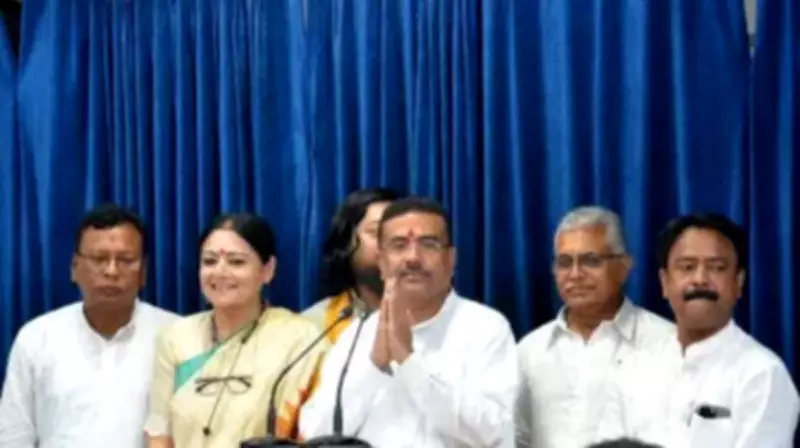
Briefing the media after the cabinet meeting, state urban development and women and child development minister Agnimitra Paul said the government decided to revisit the state's OBC structure and reservation policy in accordance with judicial directives. "There will be a revision of the state list of OBCs and cancellation of sub-categorisation of classes in such list and the percentage of reservation for the OBCs in the services and posts under the state government as per the High Court's May 22, 2024 judgment," she stated. An inquiry panel will be set up to decide quota eligibility, she added. "The state government will conduct fresh inquiries and there will be reconsideration only for those specific groups that the High Court has explicitly mentioned or identified. After reviewing the overall matter and making a decision, the state government will legally re-include those specified groups in the list," Paul explained.
Political and Legal Background
The issue of OBC reservation in Bengal has remained politically sensitive and legally contentious for years. Under the previous Trinamool Congress government led by Mamata Banerjee, several communities were added to the OBC list through executive orders issued after 2012. Official records indicate that 77 communities were included during this period. Of these, 75 were Muslim sub-groups. The Bharatiya Janata Party consistently criticised the move while it was in opposition, alleging that religion-based considerations influenced the expansion of the OBC list.

High Court Intervention
Controversy intensified in May 2024 when the Calcutta High Court struck down OBC certificates issued after 2010 under the revised system. The court observed that religion effectively became the sole criterion for extending OBC status and ruled the process unconstitutional. While existing jobs secured through the reservation framework remained protected, the ruling invalidated lakhs of certificates. The previous government later attempted to revise the OBC framework through a fresh notification, but the High Court stayed the move, citing procedural concerns.
The new government's decision marks a significant shift in the state's reservation policy, aiming to align with judicial directives and address long-standing legal challenges.