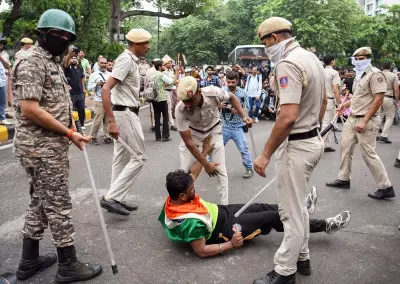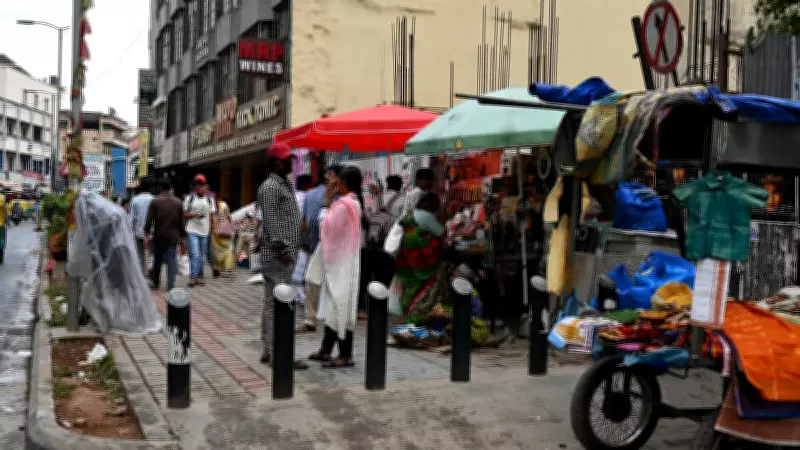
The bustling streets of Bengaluru have long been a lifeline for thousands of street vendors, but a growing conflict over walkway space is pushing them to the brink. Vendors across the city report being forcibly removed from pavements and footpaths, even as authorities have not yet established designated vending zones or activated the legally mandated Town Vending Committee (TVC). According to existing regulations under the Street Vendors (Protection of Livelihood and Regulation of Street Vending) Act, 2014, vendors should not be vacated unless vending zones are clearly marked and the TVC is fully operational. This legal safeguard, however, appears to be widely ignored, leaving vendors in a precarious state of uncertainty.
The Struggle for Legitimate Space
Street vending is a vital source of income for countless families in Bengaluru, offering affordable goods and services to millions of commuters. Yet, as the city expands and foot traffic increases, vendors are often viewed as obstructions rather than contributors to the urban economy. Many have operated on the same stretches for decades, building loyal customer bases and informal agreements with local ward officials. However, recent drives to clear walkways for pedestrian safety and aesthetic reasons have resulted in sudden evictions, confiscation of goods, and hefty fines. Vendors argue that they are left with no alternative livelihood and that the crackdown disproportionately affects the poor and marginalized.
Data from the National Association of Street Vendors of India (NASVI) indicates that Bengaluru is home to over 1.5 lakh street vendors, many of whom lack formal recognition. Without designated vending zones, they operate in a legal grey area, often paying unofficial fees to local muscle or civic staff to secure a spot. The absence of a functional TVC, which is supposed to include representatives from the municipality, police, traffic department, and vendor associations, means that vendors have no platform to negotiate or regularize their trade. This vacuum has led to inconsistent enforcement: some wards turn a blind eye, while others conduct aggressive evictions.

Legal Framework and Implementation Gaps
The Street Vendors Act mandates that every city with a population over 500,000 must constitute a TVC within six months of the Act's notification. Bengaluru formed its TVC years ago, but it has been largely defunct, with no regular meetings or decision-making. The Act also requires the creation of vending zones—designated areas where vendors can operate legally and safely—as part of the city's development plan. To date, fewer than 10% of the required zones have been identified, according to urban planning experts. This delay is often attributed to bureaucratic inertia, political resistance, and conflicts between different government departments.
In the absence of clear zoning, evictions become arbitrary. Vendors report that authorities often target specific areas without prior notice, causing them to lose not only their daily earnings but also their stored inventory. The situation is further complicated by the fact that some walkways are genuinely too narrow for both pedestrians and vendors, especially near metro stations and bus stops. Yet, critics argue, the solution lies in proper planning, not in displacing workers without alternatives.
Voices from the Street
Ramesh, a fruit vendor who has sold bananas near Majestic for 15 years, says he was suddenly told to leave last week. "I have no other place to go. This is how I feed my family. They say they will give us a proper spot, but nothing happens," he laments. His story echoes that of many others who feel betrayed by a system that promises protection but delivers only harassment. According to a recent survey by the non-profit CIVIC, over 70% of street vendors in Bengaluru have faced eviction or threat of eviction in the past year, and most have never seen a TVC member in their ward.
On the other side, pedestrian advocacy groups argue that unchecked vending causes congestion and safety hazards. "We are not against vendors, but the current situation is chaotic. Designated vending zones with basic amenities would benefit everyone," says Meera, a resident of Indiranagar. This sentiment aligns with the Act's intent: regulated vending that balances the needs of all citizens.

Way Forward: Urgent Need for Action
Experts and vendor unions are calling on the Bruhat Bengaluru Mahanagara Palike (BBMP) to urgently revive the TVC and fast-track the identification of vending zones. They emphasize that any eviction before these steps is illegal and counterproductive. Some suggest pilot projects in select wards to demonstrate how well-planned vending can coexist with pedestrian spaces. Others demand that evicted vendors be given priority in new zones and compensation for confiscated goods.
Until structural changes are made, the conflict on Bengaluru's walkways is likely to intensify. For the city's lakhs of street vendors, the fight for space is not just a matter of livelihood—it is a daily battle for dignity and survival in an increasingly unforgiving urban landscape.