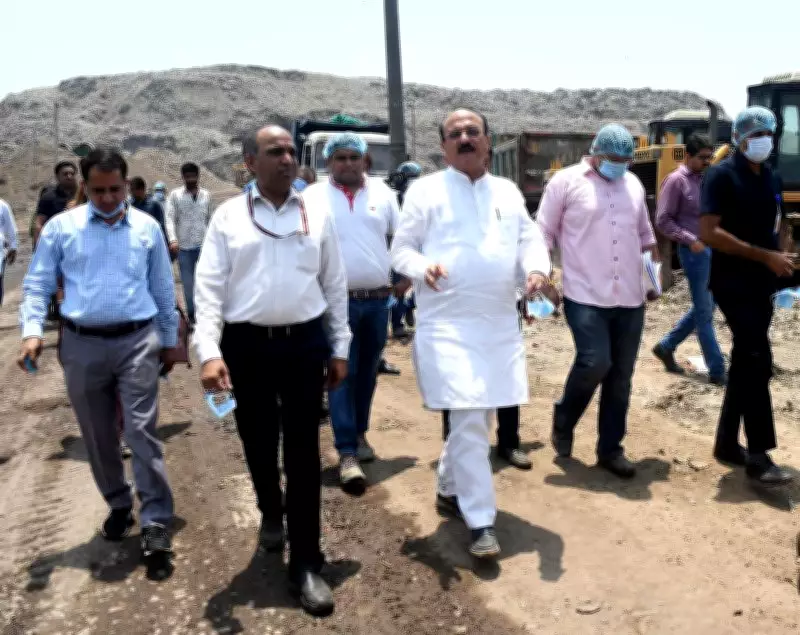
Urban Development Minister Ashish Sood on Friday inspected the Ghazipur landfill site and ordered officials to significantly speed up the remediation of legacy waste. He directed that the daily biomining capacity be increased from 7,000 metric tonnes (MT) to 12,000 MT by July 31, a rise of over 70%. A weekly monitoring mechanism was also introduced to ensure strict compliance with the timelines.
Landfill Background and Progress
Spread across nearly 70 acres, the Ghazipur landfill has been operational since 1984 and has grown into a nearly 65-metre garbage mountain, despite National Green Tribunal directions issued in 2019. According to the government, the first phase of the biomining project, carried out between November 2022 and November 2024, was meant to process 30 lakh metric tonnes of legacy waste. However, the executing firm could process only 13.90 lakh metric tonnes.
The second phase of the project, awarded on March 7, 2025, aims to process another 30 lakh metric tonnes of legacy waste by September 2026. So far, nearly 24 lakh metric tonnes of waste had been processed under Phase II, while around 20 acres of land had been reclaimed for future waste management infrastructure.

Current Waste Volume and Targets
As per the drone survey conducted in April 2026, the landfill contained 67.81 lakh metric tonnes of waste. Between April 30 and June 25 this year, about 3.39 lakh metric tonnes of waste had been processed through biomining, bringing the total waste to 66.68 lakh metric tonnes, including both legacy and fresh waste. The Delhi Government has set a target to completely clear the remaining waste by December 2027.
Bottlenecks Identified
During the inspection, Sood identified two major bottlenecks affecting the remediation process. The first relates to continuous dumping of fresh municipal waste, with nearly 2,400-2,500 metric tonnes arriving daily from Shahdara North and Shahdara South zones. While a significant quantity is diverted to the waste-to-energy plant, around 800 metric tonnes continues to accumulate at the landfill every day. The Minister asked officials to ensure that fresh waste is processed separately from legacy waste and sought a detailed two-month fresh waste processing action plan to prevent further accumulation.
The second major bottleneck was the disposal of inert material generated during biomining. Officials informed the Minister that inert waste is now being transported to the NTPC Eco Park, located around 23 km from the Ghazipur landfill. Sood instructed the executing agency to deploy more vehicles for transporting inert material and submit a compliance report within a week to ensure that disposal does not slow down the biomining process.