

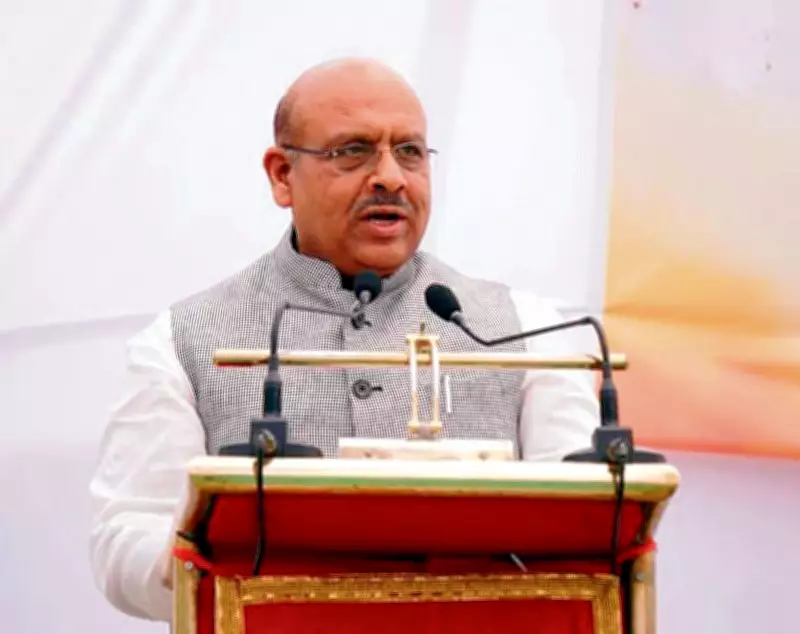
Delhi Legislative Assembly Speaker Vijender Gupta met Ladakh Lieutenant-Governor Vinai Kumar Saxena during a study tour of the Union Territory, with discussions centering on governance, infrastructure development, sustainability, and environmental challenges. The meeting took place as part of a delegation from the Delhi Assembly visiting Ladakh to observe developmental initiatives and share best practices.
Delegation Details and Meeting Context
Gupta was accompanied by Delhi MLAs Surya Prakash Khatri, Sanjay Goyal, and Aahir Deepak Chaudhary during the courtesy meeting. According to the Delhi Assembly Secretariat, the interaction covered developmental initiatives in Ladakh and innovative measures adopted by the Delhi Legislative Assembly to strengthen digital governance and promote environmental sustainability. The study tour aimed to foster inter-regional learning and cooperation.
Ladakh's Transformation Since Becoming UT
During the meeting, Saxena briefed the visiting delegation on the transformation taking place in Ladakh since it became a Union Territory. He highlighted the increase in the number of districts from two to seven, stating that the expansion had improved administrative reach and enabled faster development. The Lieutenant-Governor also spoke about ongoing infrastructure projects, including strategic tunnels and connectivity corridors aimed at ensuring year-round access and supporting economic growth in the region.

Digital Governance and Paperless Assembly
Gupta shared details of initiatives undertaken by the Delhi Assembly to modernise legislative functioning and reduce its environmental impact. He highlighted the implementation of the National e-Vidhan Application (NeVA), which has digitised legislative processes and significantly reduced paper usage. The Speaker said the shift to a paperless system had improved efficiency while also contributing to environmental conservation by cutting down on physical documentation.
Renewable Energy and Solar Power Plans
Gupta also informed the L-G about the Assembly’s renewable energy initiatives, including the installation of a 500-kW solar power system. He said the Assembly plans to add another 300 kW of solar capacity, which would help meet most of its electricity needs through clean energy while reducing power costs. This initiative aligns with broader sustainability goals and demonstrates the Assembly's commitment to reducing its carbon footprint.
Impact and Future Collaboration
The meeting underscored the potential for collaboration between Delhi and Ladakh in governance reforms, digital transformation, and environmental sustainability. Both sides expressed interest in continuing dialogue and sharing best practices. The delegation's visit to Ladakh is expected to pave the way for further exchanges and cooperative projects aimed at improving administrative efficiency and sustainable development in both regions.






