The International Olympic Committee (IOC) Ethics Commission has dismissed a complaint filed against FIFA President Gianni Infantino, ruling that the allegations of political bias fall outside its jurisdiction. The decision, announced on Tuesday, effectively shuts down the challenge brought by human rights group FairSquare, which accused Infantino of violating FIFA's political neutrality rules.
No Jurisdiction Over FIFA Governance
In its ruling, the IOC Ethics Commission stated that the complaint pertained to Infantino's role as FIFA president and not to his capacity as an IOC member. The commission argued that the alleged misconduct involved FIFA's governance and internal regulations, which are beyond the scope of IOC ethics provisions. FairSquare had sought to hold Infantino accountable under the IOC's code of ethics, but the commission concluded it did not have the authority to adjudicate matters related to FIFA's internal affairs.
Infantino has been an IOC member since 2020, a position that subjects him to the IOC's ethical standards. However, the commission emphasized that his primary role as FIFA president means that any actions taken in that capacity are governed by FIFA's own rules, not the IOC's.

Allegations of Political Bias
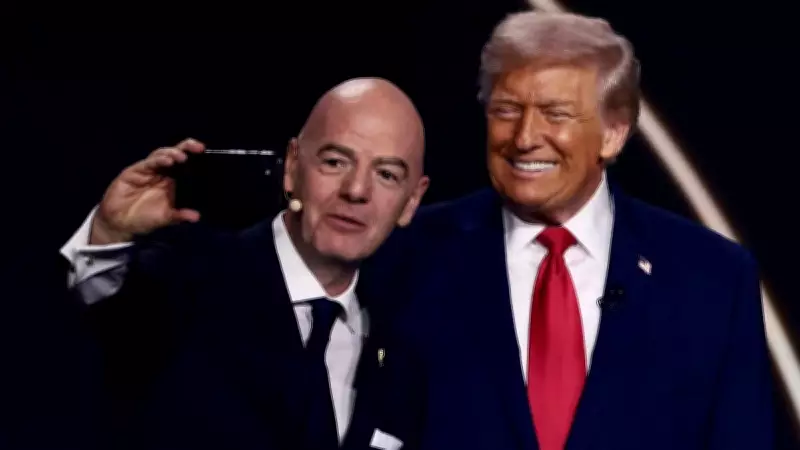
FairSquare's complaint centered on Infantino's public support for US President Donald Trump's policies and actions, which the group argued breached FIFA's requirement for political neutrality. Infantino appeared alongside Trump at several events, including the 2026 World Cup trophy presentation in Washington, D.C., where both men were greeted with loud boos from the crowd. The human rights group claimed that these actions undermined FIFA's credibility as a politically neutral sports organization.
FairSquare has been a vocal critic of Infantino's leadership, accusing him of prioritizing political relationships over human rights. The group's campaign has escalated in recent months, with multiple challenges to FIFA's ethics processes and governance structures.
Trump's Claim of Influence
The controversy was further fueled by Trump's assertion that he influenced FIFA to overturn a red card issued to US striker Folarin Balogun during the 2026 World Cup. The United States lost that match 1-4 to Belgium, and Trump claimed he personally intervened with Infantino to have the card rescinded. FIFA did not comment on the claim, but the incident highlighted the close ties between Infantino and the former president.
Infantino has not publicly addressed Trump's assertion, and FIFA has maintained that disciplinary decisions are made independently by its judicial bodies.
FairSquare's Ongoing Campaign
FairSquare has described the IOC's dismissal as a setback but vowed to continue its efforts to hold Infantino accountable. The group has called for greater transparency in FIFA's governance and has urged other international sports bodies to intervene. In a statement, FairSquare said, "The IOC's refusal to act demonstrates the gaps in sports governance that allow leaders to escape scrutiny for political bias."
The human rights group has previously challenged FIFA over its handling of human rights issues related to the 2022 World Cup in Qatar and the 2026 World Cup co-hosted by the United States, Mexico, and Canada. The 2026 tournament will be the first to be staged across three nations.
Broader Implications for Sports Governance
The case highlights the challenges of enforcing ethics rules across different international sports organizations. While the IOC has its own ethics code for members, the overlapping roles of leaders like Infantino create jurisdictional gray areas. Critics argue that the lack of a unified oversight body allows sports officials to evade accountability for actions taken in other capacities.
The IOC's decision may set a precedent for future complaints against officials who hold multiple positions. Infantino's tenure as FIFA president has been marked by both development and controversy, from expanding the World Cup to 48 teams to navigating corruption scandals and human rights criticisms.

As the 2026 World Cup approaches, scrutiny of FIFA's governance is likely to intensify, with FairSquare and other groups pushing for reforms. The IOC's dismissal of this complaint does not end the debate over Infantino's political neutrality, but it underscores the limitations of current enforcement mechanisms in international sports.