

When Kamaladevi Spoke for Punjab’s Children in 1984
In June 1984, as Punjab grappled with the aftermath of Operation Bluestar, the Indian Army conducted Operation Wood Rose, a village-combing operation involving door-to-door searches. Thousands of devotees who had surrendered at the Golden Temple complex were shuffled between prisons. While the state assessed the threat posed by each detainee, one woman thought of the children caught in the chaos.
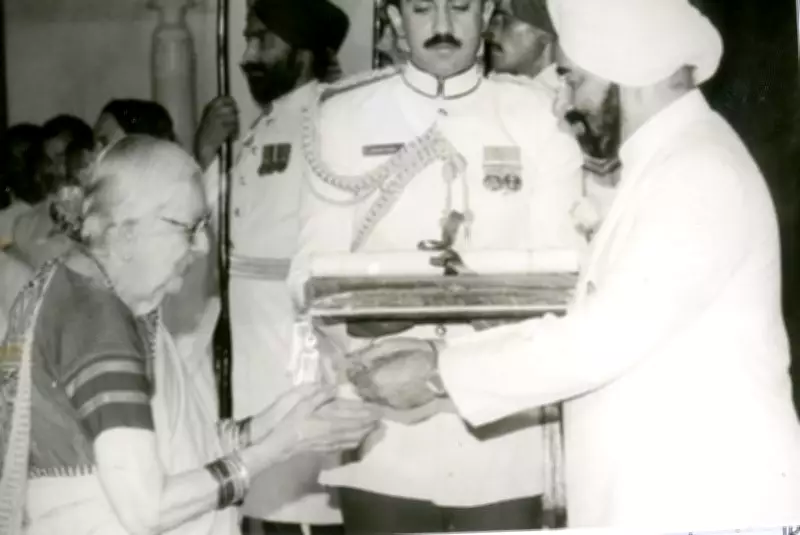
Kamaladevi Chattopadhyay (1903-1988), a Kannadiga freedom fighter and close relative of Sarojini Naidu, raised a crucial question: What about the children detained from the complex? She argued that children were not militants and should not be imprisoned indefinitely.
At 81, she petitioned the Supreme Court under Article 32, highlighting the plight of children held with convicts in high-security jails in Ludhiana and Amritsar since June 6, 1984. Many had lost parents in the army action. The youngest detainee was Babli, a one-year-old girl, held with her three-year-old sister Rani and mother Swarn Kaur. Another mother, Surinder Kaur, was jailed with her four sons, the youngest aged five. Jamila Khatun was also detained with her four children.

Journalist Gobind Thukral visited the children in September 1984 and found four-year-old Rinku, who had lost his father and whose mother was missing. Some children from the Damdami Taksal were also detained. The CBI and IB interrogated them with little empathy. These children had survived the trauma of hiding during the military operation, hearing shelling and cries of the wounded, and witnessing death. They were now lodged with known terrorists and criminals.
On September 21, 1984, Supreme Court justices O. Chinnappa Reddy and V. Khalid ordered the State of Punjab to trace the children's parents or relatives. The three mothers and their children were to be released immediately. The court also questioned the authority for detaining other children and ordered their release.
This episode is often forgotten in the history of 1984. Kamaladevi, who had worked with Mahatma Gandhi and devoted her life to refugee rehabilitation and handicrafts, acted with a mother's sensitivity. She was not concerned with national security rhetoric but focused on the children's welfare. Her intervention saved the childhood of many traumatized children.






