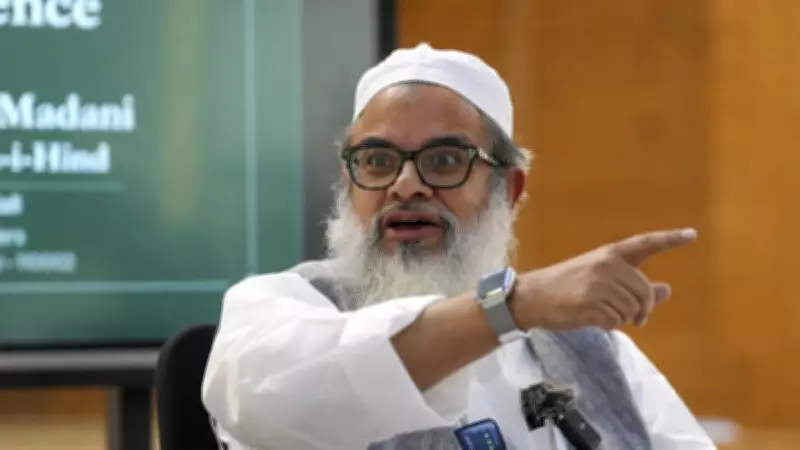
Jamiat Ulema-e-Hind chief Maulana Mahmood Madani on Monday called upon the central government to strictly adhere to constitutional principles while dealing with Waqf properties, emphasising the need to preserve all Waqf records in their original form. Speaking at a press conference in New Delhi, Madani outlined concerns over proposed amendments to the Waqf Act, which he claimed could undermine the autonomy of Waqf boards.
Madani Highlights Constitutional Safeguards
Madani stated that Waqf properties are protected under Article 26 of the Constitution, which guarantees the right to manage religious affairs. He urged the government not to introduce any changes that would infringe upon this fundamental right. “The Constitution clearly gives Muslims the right to administer their own religious endowments. Any attempt to dilute this through executive orders or legislative changes will be challenged in court,” he said.
According to Madani, there are over 600,000 registered Waqf properties in India, spanning more than 500,000 acres of land. He noted that these properties generate significant revenue for educational and charitable institutions. “Preserving Waqf records is not just a bureaucratic requirement; it is essential for protecting the rights of future generations,” he added.

Call for Transparency and Digitisation
The Jamiat chief also demanded that the government expedite the digitisation of all Waqf records to prevent encroachments and illegal transfers. He said that the current system of manual record-keeping has led to widespread mismanagement and loss of documents. “We appreciate the government’s efforts towards digitisation, but it must be done without altering the historical records or weeding out any entries,” Madani emphasised.
He cited examples from Uttar Pradesh and Maharashtra where thousands of Waqf properties have been encroached upon due to lack of proper records. “If records are not preserved accurately, it becomes impossible to reclaim these properties for public welfare,” he said.
Concerns Over Proposed Amendments
Madani expressed strong opposition to certain provisions in the draft Waqf (Amendment) Bill, 2024, which reportedly seeks to reduce the powers of state Waqf boards and bring them under direct central control. He argued that such changes would violate the federal structure of the Constitution. “Waqf boards are state-level bodies, and any attempt to centralise them will create administrative chaos and lead to more corruption,” he warned.
He also raised concerns about a clause that would allow non-Muslims to be appointed to Waqf tribunals. “This directly contradicts the purpose of Waqf, which is a religious institution. We cannot accept any dilution of the Islamic character of these bodies,” Madani asserted.
Call for Dialogue
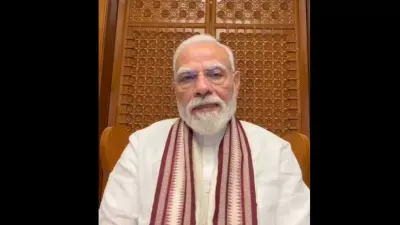
The Jamiat chief called upon Prime Minister Narendra Modi to initiate a broad consultation with all stakeholders before framing any new policy. “The government should not rush through changes that affect the religious rights of 200 million Muslims. We are ready to sit for talks and offer constructive suggestions,” he said.
He reminded that the Supreme Court has in multiple judgments upheld the right of Muslims to manage Waqf properties autonomously. “Any law that goes against these judgments will be struck down by the courts. It is better to act with caution and uphold constitutional values,” Madani stated.
In response, a senior official from the Ministry of Minority Affairs said that the government is open to discussions and assured that the interests of the community would be protected. “The proposed amendments aim to bring transparency and efficiency, not to undermine any constitutional rights,” the official said on condition of anonymity.