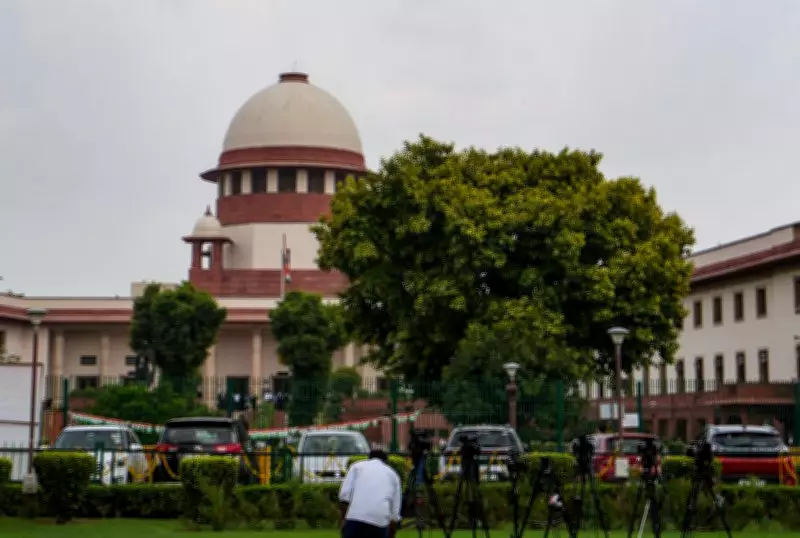
The Supreme Court of India on Wednesday established clear guidelines for determining the annual income of deceased or injured claimants in motor accident cases, using Income Tax Returns (ITRs) as the primary reference. The ruling, delivered by a Bench comprising Justice Sanjay Karol and Justice N Kotiswar Singh, distinguishes between salaried employees and self-employed individuals to ensure uniformity in compensation awards.
Key Guidelines for Income Computation
For salaried victims, the court directed that only the ITR of the previous year should be considered sufficient to determine annual income. In contrast, for self-employed persons, the average income disclosed in ITRs for up to the previous three years should ordinarily serve as the reference point. The Bench emphasized that there cannot be a rigid formula for computing annual income under the Motor Vehicles Act, but ITRs, being statutory documents, are an essential reference.
Justice Karol, writing the judgment, stated: “In the considered view of this court, there can be no hard and fast formula for computing the annual income of a deceased person/claimant. ITRs being a statutory document are an important reference point when it comes to assessing one’s income, for the purposes of compensation under the Motor Vehicles Act.”

Background and Rationale
The guidelines were formulated after the court accepted suggestions from senior lawyer JR Midha, who argued for a bifurcation between salaried and self-employed individuals in income assessment. The ruling aims to resolve conflicting approaches adopted by various courts, where some relied solely on the latest ITR while others averaged income from preceding years, leading to inconsistencies in compensation amounts.
The verdict came in an appeal filed by the family of Rashmirekha Tripathy against Sriram General Insurance Company Ltd, seeking enhanced compensation. The deceased, a 39-year-old construction businessman, had disclosed an annual income of approximately Rs 11.6 lakh and Rs 15.06 lakh in the two preceding assessment years.
Case Application and Enhanced Compensation
The Orissa High Court had averaged the two ITRs and fixed the annual income at Rs 13.33 lakh. However, the Supreme Court, considering the nature of the deceased’s construction business, fixed his annual income at Rs 14 lakh. Consequently, the top court enhanced the compensation payable to his family from Rs 1.87 crore awarded by the high court to Rs 1.97 crore, while maintaining interest at six per cent per annum.
This decision is expected to bring clarity and uniformity to the basis for compensation awards in motor accident claims, reducing litigation and ensuring fair treatment for victims and their families across India.