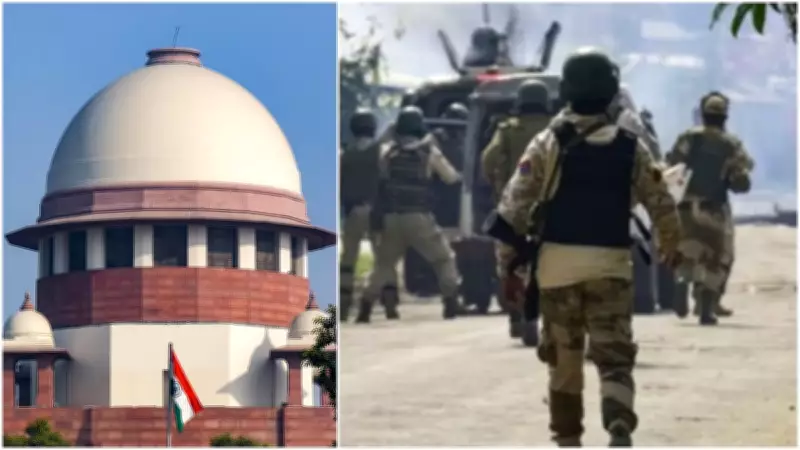
The Supreme Court of India has proposed the establishment of special courts to handle cases related to the ethnic violence in Manipur, urging the completion of investigations within a stipulated timeframe. The directive came during a hearing on a petition concerning the ongoing clashes between the Kuki and Meitei communities that have resulted in significant loss of life and displacement since May 2023.
Special Courts to Expedite Justice
A bench comprising Chief Justice of India and two other judges suggested setting up dedicated special courts to ensure swift trial and verdicts in cases arising from the Manipur violence. The court emphasized that such specialized judicial mechanisms are necessary to restore public confidence and deliver justice to victims. The proposal includes fast-tracking the more than 6,000 FIRs filed in connection with the violence, according to official data presented during the hearing.
The Supreme Court also permitted the legal aid counsel representing the victims to approach the offices of the Chief Justices of the Gauhati High Court and the Manipur High Court to obtain copies of the chargesheets. This step aims to facilitate transparency and enable the victims' lawyers to participate effectively in the judicial process.

Monitoring and Compliance
Earlier, the court had expressed concern over the slow pace of investigations and directed the Manipur government to submit a status report on the probe. The state government has been asked to ensure that no evidence is tampered with and that witnesses are protected. The court further noted that the special courts, once established, would operate under the supervision of the Gauhati High Court, which has territorial jurisdiction over Manipur.
The violence in Manipur, which erupted in May 2023, has led to over 200 deaths and displaced nearly 60,000 people. The Supreme Court has been closely monitoring the situation and has passed several interim orders, including directions for the deployment of additional central forces and the provision of relief to affected families.
Legal Aid and Access to Justice
The court's permission to allow legal aid counsel to access chargesheets directly from the chief justices' offices is seen as a significant move to empower victims. Previously, victims' lawyers faced hurdles in obtaining case documents, causing delays in legal proceedings. The Supreme Court observed that the administration of justice must be accessible and prompt, especially in cases involving large-scale violence and human rights violations.
The next hearing is scheduled for August 2026, during which the court will review the progress in setting up the special courts and the status of investigations. The Supreme Court has warned that any lapses in compliance would be viewed seriously.