The End of an Era: Ajit Pawar's Political Odyssey
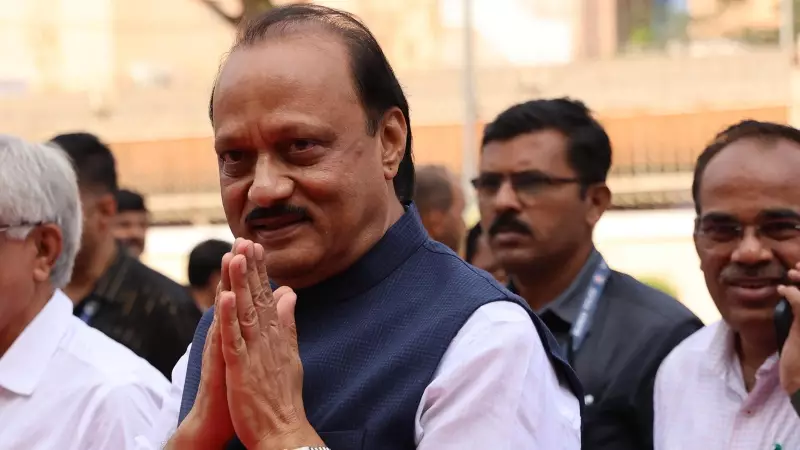
Maharashtra Deputy Chief Minister Ajit Pawar, a central figure in the state's political landscape for over three decades, passed away in a plane crash early on Wednesday, January 28, 2026. His long public life was characterized by a complex interplay of loyalty to his uncle Sharad Pawar and a relentless drive for political autonomy that ultimately reshaped Maharashtra's power dynamics.
Early Years and Political Apprenticeship
Born in 1959, Ajit Pawar entered electoral politics in 1991 when he was elected as Member of Parliament from Baramati, the Pawar family stronghold. As the son of Sharad Pawar's elder brother Anantrao, his initial political journey unfolded entirely under his uncle's towering presence and mentorship. In a significant early gesture of loyalty, he resigned his parliamentary seat in 1992 to allow Sharad Pawar to contest after the senior leader was inducted into Prime Minister P.V. Narasimha Rao's Union Cabinet.
His transition to state politics began in 1995 when he was elected to the Maharashtra Legislative Assembly from Baramati, a constituency his uncle had represented for decades. Ajit Pawar would go on to retain this seat in successive elections through 1999, 2004, 2009, 2014, and 2019, establishing himself as one of western Maharashtra's most powerful regional leaders.

Building an Independent Power Base
Like other members of the Pawar family, Ajit built his political foundation through the cooperative movement, but he distinguished himself through his organizational prowess and intolerance for dissent. After serving as a junior minister for over nine years, he was elevated to the Maharashtra Cabinet in 1999 at age 40, coinciding with Sharad Pawar's break from the Congress to form the Nationalist Congress Party (NCP).
Through heavyweight portfolios including Irrigation, Rural Development, Water Resources, and Finance, Ajit Pawar cultivated a loyal group of leaders within the NCP whose allegiance lay firmly with him rather than the party leadership. This created growing unease within the Pawar family's political circle, particularly as succession questions intensified with the entry of Sharad Pawar's daughter Supriya Sule into electoral politics in 2009 and the later emergence of third-generation leader Rohit Pawar.
Moments of Rebellion and Reconciliation
Ajit Pawar's relationship with the NCP leadership experienced several public fractures. In 2004, he broke ranks when the party conceded the Chief Minister's post to the Congress despite being the single-largest coalition partner. Eight years later, he resigned as Deputy Chief Minister amid allegations related to irrigation projects, triggering a government crisis that required Sharad Pawar's personal intervention to resolve.
The most dramatic rupture occurred in November 2019 when, as the NCP negotiated a coalition with the Congress and Shiv Sena, Ajit Pawar staged a surprise defection to form a government with the BJP. In an early morning ceremony, Devendra Fadnavis was sworn in as Chief Minister with Ajit Pawar as his deputy, though this arrangement collapsed within 80 hours when it became clear Ajit lacked sufficient support from NCP legislators. He subsequently returned to the NCP fold and reconciled with his uncle, becoming Deputy Chief Minister again in the Maha Vikas Aghadi government formed that December.
The Final Split and Political Legacy
In July 2023, Ajit Pawar made his most definitive break yet, splitting the NCP and joining the BJP-led Mahayuti government with substantial MLA support. This move formally divided the party into two factions and ended decades of political unity within the Pawar family. The Election Commission later recognized Ajit Pawar's faction as the official NCP, granting it the party name and symbol, while Sharad Pawar's group continued as NCP (SP).
In the 2024 Maharashtra Assembly elections, Ajit Pawar consolidated his position within the ruling alliance, with his party winning 41 of the 59 seats it contested and securing approximately 9% of the vote share. He continued as a key partner in the Mahayuti government, though tensions with the BJP surfaced over political positioning and electoral strategy.

Ajit Pawar's political journey represents a remarkable evolution from loyal nephew to independent power center, marked by strategic calculations, organizational control, and an unwavering determination to carve his own path in Maharashtra's complex political landscape.