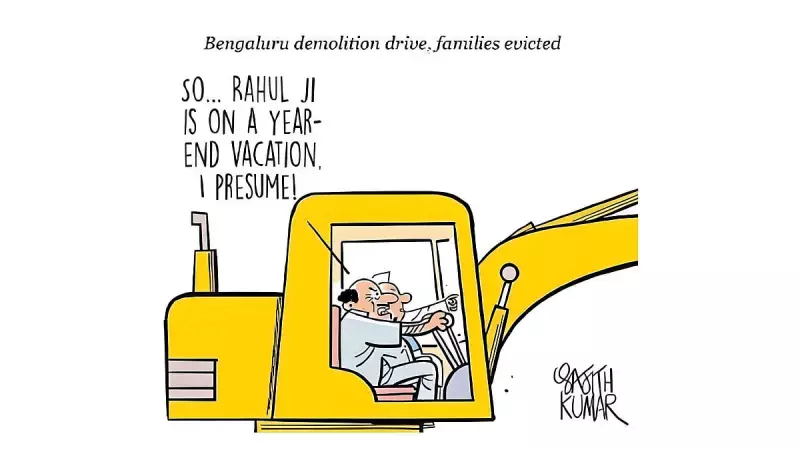
The city of Bengaluru is currently gripped by tension and conflict as a large-scale demolition drive initiated by the civic authorities enters a contentious phase. The Bruhat Bengaluru Mahanagara Palike (BBMP), the city's municipal corporation, has deployed bulldozers and demolition squads across various localities to raze structures deemed illegal or in violation of building bylaws.
The On-Ground Reality: Bulldozers and Barricades
On the streets, the scene is one of stark confrontation. Heavy machinery, escorted by a strong police presence, has moved into residential and commercial areas. The targets are primarily structures built on stormwater drains, lake beds, and other encroached public lands that have been identified as major culprits behind the city's chronic flooding and infrastructure problems. Residents, caught by surprise or having exhausted legal avenues, are staging protests, forming human chains, and pleading with officials to halt the operations. The air is thick with the dust of collapsing concrete and the sound of raised voices.
The BBMP has defended its actions as a necessary step to reclaim public land and restore the natural flow of stormwater drains. Officials argue that years of unchecked encroachments have severely compromised the city's drainage system, leading to disastrous floods during monsoons. The drive is positioned not as an arbitrary exercise of power but as a critical urban management intervention mandated by court orders and long-pending civic plans.

A Legacy of Unplanned Growth and Public Anger
The roots of this crisis lie in Bengaluru's rapid, often unregulated, expansion over the past few decades. The demand for real estate has outpaced planning and enforcement, leading to widespread violations. While authorities point to legal notices and prior warnings issued to violators, many affected citizens claim they were not given adequate time or that the process lacks transparency. The sight of homes and businesses being reduced to rubble has ignited a fierce debate about governance, accountability, and the human cost of urban development.
Local communities and activists acknowledge the need for clearing encroachments but question the timing, selectivity, and seemingly abrupt nature of the drive. There are allegations that the action disproportionately targets certain areas or smaller violators while turning a blind eye to larger, more powerful entities. This perception has fueled public anger and a sense of injustice among those facing the brunt of the demolition.
Broader Implications for India's Tech Capital
The ongoing demolition drive in Bengaluru transcends a simple law-and-order operation. It highlights the deep-seated challenges facing one of India's most important metropolitan centers. The city, renowned globally as a technology and startup hub, is simultaneously grappling with crumbling civic infrastructure, environmental degradation, and a crisis of urban planning. This conflict between enforcing regulations and addressing the humanitarian fallout puts the BBMP and the state government in a difficult position.
The outcome of this drive will set a significant precedent for how Indian cities manage illegal constructions and reclaim public spaces. It raises critical questions about the need for proactive, transparent urban governance to prevent such large-scale confrontations in the future. Experts suggest that alongside enforcement, there must be a robust mechanism for citizen grievance, fair hearing, and a focus on sustainable urban planning that accommodates growth without sacrificing ecological balance or legal frameworks.
As the bulldozers continue their work, Bengaluru finds itself at a crossroads. The city must navigate the complex path between upholding the rule of law and demonstrating empathy for its residents. The resolution of this conflict will likely shape Bengaluru's urban landscape and its social contract with citizens for years to come, serving as a cautionary tale for other fast-growing Indian metros facing similar dilemmas of development versus regulation.