

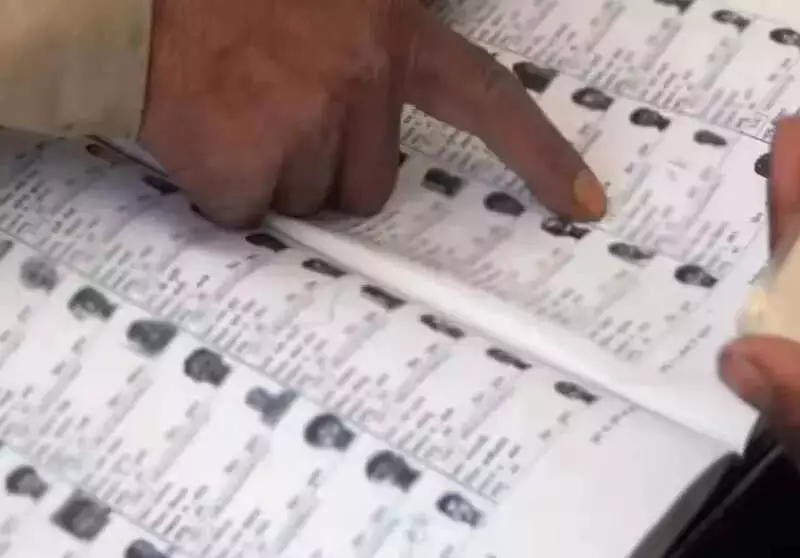
In a significant political move, the Bharatiya Janata Party's Uttar Pradesh unit has launched an extensive campaign to locate millions of voters deemed 'absent' or 'transferred' from the state's electoral rolls. This initiative comes in direct response to the controversial deletion of approximately 2.89 crore voters from the lists, a development that has stirred considerable debate.
A Strategic Push Ahead of 2027
The campaign, strategically timed ahead of the crucial 2027 Uttar Pradesh Assembly elections, is driven by Chief Minister Yogi Adityanath's recent assertion. He claimed that a majority of these 'missing' voters are traditional supporters of the BJP. With estimates suggesting UP's voter list should ideally contain over 15 crore electors, the party views this gap as a critical area requiring immediate attention.
The Election Commission's schedule has set a clear timeline for this process. Objections and claims regarding additions or deletions to the voter list will be accepted between January 6 and February 6. Following this period, the final, revised voter list will be officially published on March 6.

Three-Pronged Campaign Strategy
Senior state BJP leaders have outlined a focused, three-front strategy for this campaign. Firstly, the party aims to trace voters classified as 'absent' or those who have transferred residences. Secondly, it will work to re-enroll individuals whose names were removed due to documentation gaps or errors. Thirdly, a special emphasis will be placed on tapping into first-time voters, particularly the youth demographic.
The campaign machinery will be mobilized through the state's organizational leaders and senior functionaries, including party MPs, MLAs, and MLCs at the local level. District units have been instructed to execute this drive aggressively.
Focus on Form 6 and Migrant Voters
A cornerstone of this effort is a special focus on Form 6, the primary application used by Indian citizens for new voter registration or to transfer their registration to a new constituency. Political experts note that this focus indicates the BJP's intent to align its cadre network closely with the Election Commission's formal procedures, ensuring the campaign remains within legal boundaries.
A significant target group includes migrant workers who are natives of Uttar Pradesh but work in other states. A senior UP BJP functionary revealed that the party plans to reach out to these individuals, many of whom are registered as voters in their states of employment. The objective is to convince them to get registered in their home state of UP. Analysts suggest that engaging these often politically disengaged migrant voters could boost turnout among social groups traditionally leaning towards the BJP.
Furthermore, the party will approach voters who live in urban areas but remain registered in their native villages. BJP workers will encourage them to update their registration to their current urban locations, making it easier for them to cast their votes. This move is seen as an attempt to strengthen the party's presence in urban and semi-urban areas, where lower turnout has reportedly hurt its prospects in past elections.
This comprehensive campaign underscores a broader belief within the party that in contemporary elections, voter presence is as crucial as voter preference. The revision of voter lists under the Special Intensive Revision (SIR) has increasingly become a political battleground. Opposition parties, including the Samajwadi Party and Congress, have criticized the exercise, alleging it was 'tailored' to remove the names of their supporters.






