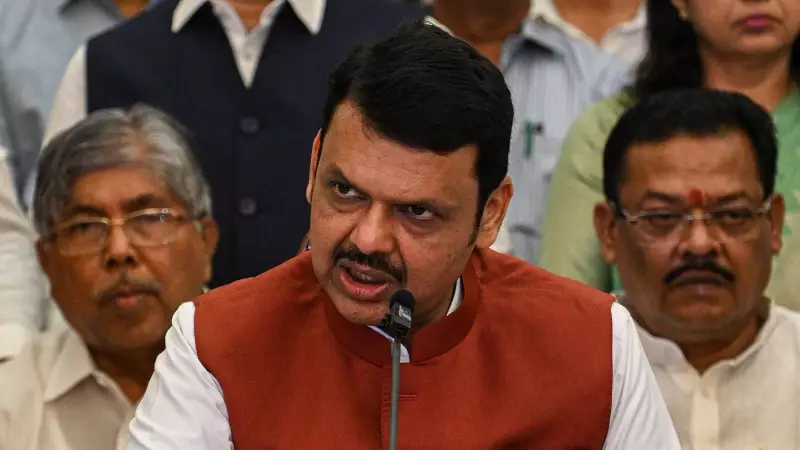
In a sharp political counter-attack, Maharashtra Chief Minister Devendra Fadnavis on Friday dismissed the 'outsider' label pinned on him by the Thackeray cousins, turning the tables by questioning their own contributions to Mumbai despite being born and raised in the city.
The 'Outsider' Accusation and the Retort
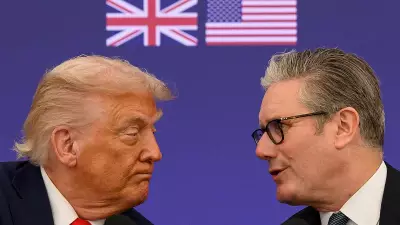
The war of words erupted after Shiv Sena (UBT) chief Uddhav Thackeray and Maharashtra Navnirman Sena (MNS) chief Raj Thackeray, in a recent interactive session, jointly criticized Fadnavis. They labeled him an "outsider who does not understand the issues of Mumbai." Addressing a rally in Andheri, CM Fadnavis launched a pointed rebuttal.
He invoked the legacy of the late Balasaheb Thackeray, Uddhav's father and Raj's uncle, to make his case. "Balasaheb Thackeray was one of the leaders whose understanding of Mumbai was best. Yet, he was born in Pune," Fadnavis stated. Drawing a contrast, he added, "Whereas, those who were born in Mumbai and aged here could not solve a single problem of the city."

Fadnavis specifically targeted Uddhav Thackeray's long association with the Brihanmumbai Municipal Corporation (BMC), which the Shiv Sena dominated for decades. "Uddhav held the reins of the BMC for the last 25 years but could do nothing to address the problems of Mumbaikars," the Chief Minister asserted.
Questioning Legacy and Listing Achievements
The CM posed a direct question to the Thackeray camp regarding their work for the city's residents. "The question that comes to everybody’s mind is what has Uddhav done for making the lives of people better in the financial capital of India," he said. He also questioned what they had done for the "Marathi Manoos" (Marathi-speaking common man) "who were forced to leave the city and seek shelter beyond Vasai-Virar."
Fadnavis emphasized that mere birthright does not guarantee a legacy. "Just because you are born in Mumbai does not give you a legitimacy to celebrate and get garlanded," he remarked.
Shifting focus to his administration's track record, the Chief Minister detailed key infrastructure projects. He highlighted the planning and implementation of a 475 km Metro rail network connecting the entire Mumbai Metropolitan Region (MMR). "The process of decongestion in local trains by providing an alternative in Metro has become a reality," he stressed. Future plans include making local trains air-conditioned to ensure safe, comfortable, and affordable travel for all commuters.
Housing and a Slum-Free Mumbai Vision
On the critical issue of housing, Fadnavis pointed to the redevelopment of BDD chawls as a significant move to provide larger homes at affordable rates. "It is our commitment to give Marathi Manoos a house within the city. And ensure nobody is driven out of Mumbai," he stated.
Clarifying his government's stance on slum redevelopment, the CM said, "When we talk of slum free Mumbai it is not to get rid of the poor. Instead, we want to ensure they settle in decent houses in the same place within the city." This, he implied, was a tangible effort to solve the city's core problems, contrasting it with the rhetoric of his political opponents.
The exchange marks a significant escalation in the political battle for Mumbai's narrative ahead of crucial elections, with legacy, identity, and development taking center stage.