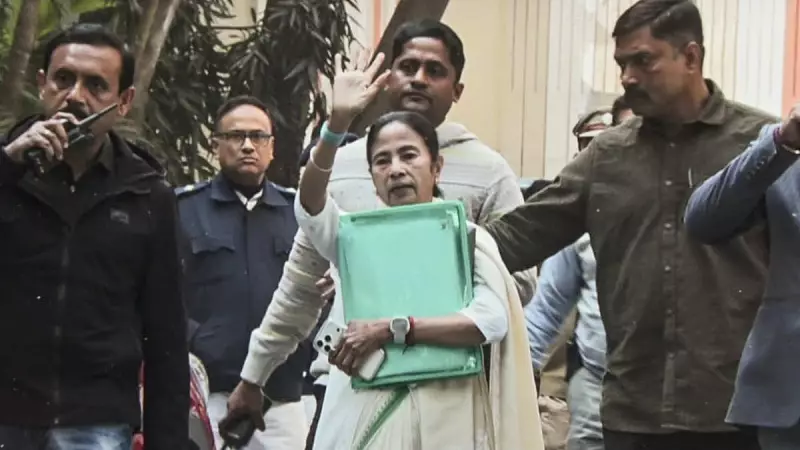
A dramatic scene unfolded in Kolkata on Thursday, January 8, 2026, as West Bengal Chief Minister Mamata Banerjee made a surprise and unconventional visit to the office of the Indian Political Action Committee (I-PAC). Her arrival coincided with the presence of officials from the Enforcement Directorate (ED), a central investigative agency, at the building's doorstep, setting the stage for a significant political confrontation.
The Unconventional Entry
Choosing to avoid any direct interaction with the central force personnel present, Chief Minister Banerjee executed a discreet entry. She accessed the building via the basement and used a general lift to reach the 11th floor, where the I-PAC office is located. This move was notable because a separate VIP lift arrangement was available and operational in the building. Her decision to forego the privileged access underscored the charged nature of her visit, presenting a image of a leader directly confronting a challenge.
The Context of the Confrontation
The presence of the Enforcement Directorate officials is understood to be part of an ongoing investigation, the specifics of which added a layer of high tension to the event. I-PAC, a political consultancy firm that has previously worked with Banerjee's Trinamool Congress party, found itself at the centre of this standoff. The Chief Minister's decision to personally visit the premises at that precise moment was widely interpreted as a strong show of solidarity and a defiant political statement against the actions of central agencies.
Political Repercussions and Symbolism
This incident is set to intensify the ongoing political tussle between the Trinamool Congress-led state government and the central administration. Banerjee's calculated move, bypassing the expected protocol, transforms a routine investigative procedure into a public spectacle of resistance. It reinforces her long-standing narrative of fighting against what she terms "overreach" by central agencies. The event on January 8 is likely to have lasting implications for the political discourse in West Bengal, potentially galvanizing her support base while drawing sharp criticism from opponents.
The sequence of events highlights the deepening rift in Indian federal politics, where the use of investigative agencies has become a frequent flashpoint. As details continue to emerge, this dramatic episode at the I-PAC office in Kolkata marks a significant chapter in the state's contemporary political history.