Mumbai's Mayor Race Hinges on Political Alliances After BMC Polls
The question of who will become Mumbai's next mayor is creating intense political drama. The Bharatiya Janata Party emerged as the single-largest party in the recently concluded Brihanmumbai Municipal Corporation elections. However, the party cannot appoint a mayor without support from its allies.
Mahayuti Alliance Holds the Key
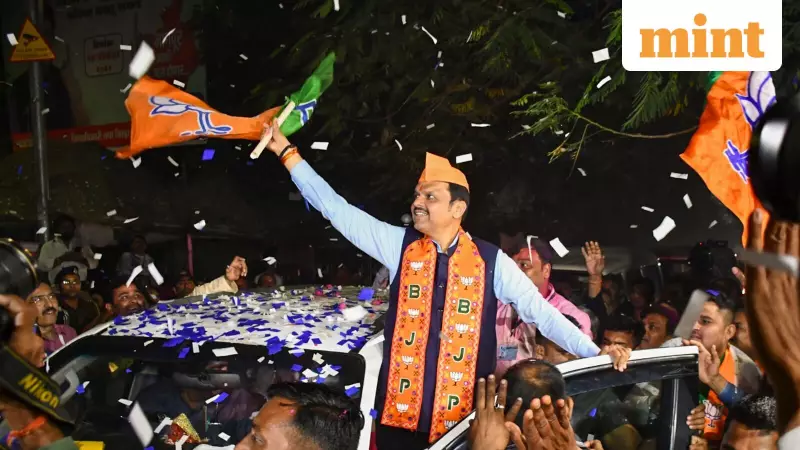
Maharashtra Chief Minister Devendra Fadnavis made a significant statement about the mayoral position. He declared that the new mayor would definitely come from the Mahayuti alliance. "God above has decided that there will be a Mahayuti Mayor," Fadnavis told reporters.
The numbers clearly support his confidence. The BJP secured eighty-nine seats in the 227-ward BMC. Their ally, Eknath Shinde's Shiv Sena, won twenty-nine seats. Together, they command one hundred eighteen corporators. This comfortably crosses the crucial halfway mark of one hundred fourteen seats required to appoint a mayor.

The BJP's Precarious Position
Despite being the largest party, the BJP faces a delicate situation. The party needs twenty-five additional votes to reach the magic number independently. This makes them dependent on Shinde's Shiv Sena legislators. Any rebellion within the Shinde camp could jeopardize the BJP's plans for the mayor's post.
Political observers are watching closely for signs of discontent. The stability of the alliance will directly determine who gets to lead India's richest municipal corporation.
Opposition Numbers Tell a Different Story
The opposition parties, if they unite, present an interesting but insufficient challenge. Uddhav Thackeray's Shiv Sena (UBT) holds sixty-five seats. Raj Thackeray's Maharashtra Navnirman Sena has six. The Congress party contributes twenty-four seats.
Smaller parties add to this count. The All India Majlis-e-Ittehadul Muslimeen has eight corporators. The Samajwadi Party holds two seats. Sharad Pawar's Nationalist Congress Party (Sharadchandra Pawar) has one seat.
Even if all these opposition groups combine forces, they only reach one hundred nine seats. They would still need support from five additional corporators. This mathematical reality means the opposition cannot form a majority without help from either the BJP or Shinde's Shiv Sena.
Alternative Scenarios and Possibilities
Several intriguing possibilities exist beyond the main alliance. What if Uddhav Thackeray's Shiv Sena (UBT) decides to support the BJP? Together, they would command one hundred fifty-four seats, creating an overwhelming majority.
Another factor is Ajit Pawar's Nationalist Congress Party, which won three seats. Although part of the Mahayuti at the state level, the party contested the BMC polls separately. Their three votes could become significant in a tight situation.
The political landscape remains fluid. All parties are carefully calculating their next moves. The final decision will depend on negotiations, loyalties, and possibly some unexpected political maneuvers.
The Waiting Game Continues
Mumbai now watches as political leaders engage in backroom discussions. Will the BJP and Shiv Sena reach a consensus on their mayoral candidate? Could the opposition parties somehow bridge their five-seat deficit? Might disgruntled corporators from any party create surprises?
These questions remain unanswered for now. The numbers provide a framework, but politics often defies simple arithmetic. The coming days will reveal whether mathematical majorities translate into political reality for Mumbai's next mayor.