

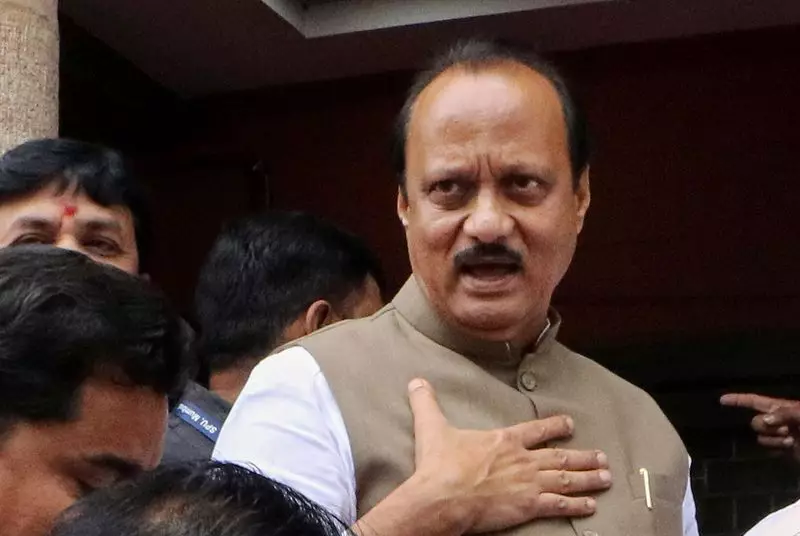
In a significant development that has sent shockwaves through Maharashtra's political circles, a controversial land deal involving the sons of Deputy Chief Minister Ajit Pawar has been officially cancelled by the state government. The company involved in the transaction now faces a massive financial penalty of ₹42 crore for alleged stamp duty violations.
The Controversial Land Transaction
The dispute centers around a prime piece of real estate in Pune's Manjari Khurd area, where a company named Kakade Infrastructure sought to purchase agricultural land measuring approximately 7.5 acres. The transaction came under intense scrutiny when it was revealed that the company had connections to Ajit Pawar's family through his sons, Parth Pawar and Vishakha Pawar.
According to official documents, the land deal was initially registered in 2020 with a declared value that raised eyebrows among revenue officials. The transaction value was reportedly set at around ₹21 crore, but authorities suspected that the actual market value was significantly higher, leading to potential stamp duty evasion.

Government Action and Financial Penalties
The Maharashtra government's revenue department took decisive action by first revoking the land deal registration and then imposing a hefty penalty equivalent to double the original stamp duty amount. This resulted in a total financial liability of ₹42 crore for Kakade Infrastructure, the company involved in the transaction.
This penalty represents one of the largest such impositions in recent memory for alleged stamp duty violations in Maharashtra's real estate sector. The double stamp duty penalty is a provision under the Maharashtra Stamp Act that allows authorities to charge twice the deficient amount when they determine that the property was deliberately undervalued to evade proper stamp duty payments.
Political Implications and Reactions
The cancellation of the land deal and the substantial financial penalty come at a politically sensitive time for Deputy Chief Minister Ajit Pawar and his family. The Nationalist Congress Party leader has faced increasing scrutiny over various business dealings connected to his family members.
Opposition parties have seized upon the development, calling it evidence of corruption and demanding a thorough investigation into all land deals involving political leaders and their relatives. The timing is particularly significant given the upcoming elections and the ongoing power dynamics within Maharashtra's coalition government.
Political observers note that this case could have far-reaching implications for Pawar's political career and the public perception of his administration's commitment to transparency in governance.
Broader Impact on Real Estate Practices
The stringent action taken by the Maharashtra government in this case sends a strong message to the real estate sector about the consequences of undervaluing property transactions to avoid proper stamp duty payments. Industry experts believe this could lead to more cautious approaches in property valuation and registration across the state.
The case also highlights the increasing vigilance of revenue department officials in detecting potential stamp duty evasion, particularly in high-value transactions involving politically connected individuals or entities.
Real estate developers and investors are likely to review their compliance procedures more carefully in light of this development, as the financial penalties for violations can be substantial enough to significantly impact business operations.
The Maharashtra government's firm stance on this matter demonstrates its commitment to ensuring proper revenue collection from real estate transactions, even when they involve influential political families.






