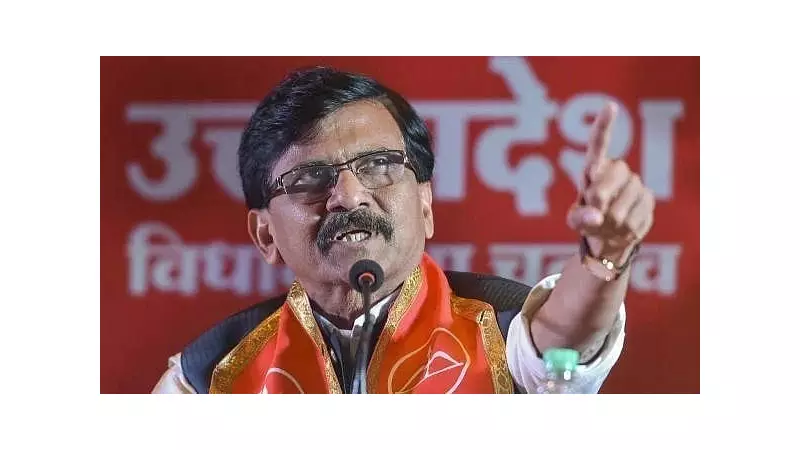
In a significant political development, Shiv Sena leader Sanjay Raut has declared that the Bharatiya Janata Party will secure the mayor's position in Mumbai, asserting that Chief Minister Eknath Shinde's faction has been left with no viable options. This statement comes nearly two weeks after the BJP-Shiv Sena alliance emerged victorious in the crucial Brihanmumbai Municipal Corporation elections, yet uncertainty continues to cloud the appointment of the city's next mayor.
Political Stalemate in Mumbai's Civic Leadership
The Brihanmumbai Municipal Corporation elections, held earlier this month, resulted in a decisive win for the alliance between the Bharatiya Janata Party and Shiv Sena. However, the post-election period has been marked by prolonged discussions and negotiations regarding the distribution of key positions, particularly the prestigious role of Mumbai's mayor. Sanjay Raut's recent comments highlight the underlying tensions and strategic maneuvering within the coalition as both parties vie for influence in India's financial capital.
Sanjay Raut's Assertion on BJP's Dominance
Sanjay Raut, a prominent figure in Shiv Sena, emphasized that the BJP is poised to take control of the mayor's office, suggesting that this outcome is inevitable given the current political dynamics. He pointed out that Eknath Shinde's party, which split from the original Shiv Sena to form a separate faction, now finds itself in a position where it has limited bargaining power and few alternatives to challenge the BJP's claim. Raut's remarks underscore the complex power-sharing arrangements that often characterize coalition politics in Maharashtra.

Implications for Maharashtra's Political Landscape
The uncertainty surrounding the mayor's appointment reflects broader challenges within the BJP-Shiv Sena alliance, which has been instrumental in shaping state governance. As Mumbai serves as a critical hub for economic and administrative activities, the selection of its mayor carries significant weight, influencing policy decisions and civic management. The delay in finalizing this key position could impact the efficiency of municipal operations and public service delivery in the metropolis.
Political analysts note that Sanjay Raut's statement may signal deeper rifts or strategic posturing ahead of future electoral battles. The BJP's potential ascension to the mayor's post would reinforce its growing influence in urban centers across Maharashtra, while Eknath Shinde's faction might need to reassess its coalition strategies to maintain relevance. This development is closely watched by stakeholders, as it could set precedents for alliance politics and civic leadership in other major Indian cities.
As of January 27, 2026, the situation remains fluid, with ongoing discussions expected to determine the final outcome. The resolution of this political impasse will not only shape Mumbai's governance but also offer insights into the evolving dynamics of Indian politics at the state and municipal levels.