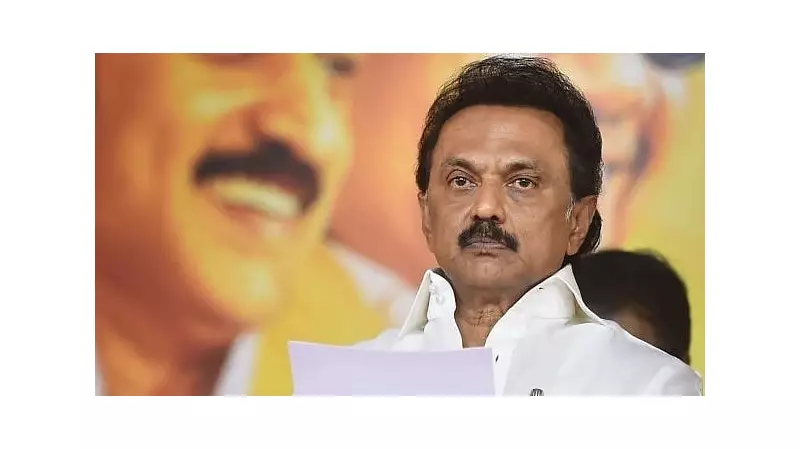
Tamil Nadu Chief Minister M.K. Stalin has launched a sharp political attack against the Bharatiya Janata Party (BJP)-led government at the Centre, accusing it of weaponising yet another institution. In a significant statement made on January 9, 2026, Stalin alleged that the Central Board of Film Certification (CBFC), commonly known as the Censor Board, has joined a list of central agencies being used as tools against political opponents.
A New Allegation in a Familiar Pattern
Drawing a direct parallel with central investigative bodies that have often been at the centre of political controversy, Stalin stated that the Censor Board has now been added to the arsenal. He explicitly named the Central Bureau of Investigation (CBI), the Enforcement Directorate (ED), and the Income Tax Department (IT) as other agencies he believes are being misused. The Chief Minister's condemnation was unequivocal and severe, shared via his official social media account.
"On the lines of #CBI, #ED, #IT, the Censor Board has also become a new weapon of the BJP government. Strong condemnations," wrote Stalin in his post. The message, which included hashtags for the mentioned agencies and #CBFC, was posted at 20:52 IST on January 9, 2026. This public accusation adds a new dimension to the ongoing political tussle between the Dravida Munnetra Kazhagam (DMK)-ruled state and the Union government.

The Context of Federal Tensions
This allegation does not exist in a vacuum. For several years, opposition parties across India, including the DMK, have consistently accused the central government of leveraging its control over federal agencies to intimidate and pressure political rivals. The CBI and ED have been involved in high-profile investigations against leaders of various non-BJP ruled states. Stalin's statement broadens this critique to include a regulatory body responsible for film certification, suggesting its decisions may be politically motivated.
The charge implies that the CBFC could be used to delay, censor, or otherwise hinder creative content—particularly films or media—that is critical of the ruling party or its ideology. This raises serious questions about artistic freedom and the independence of regulatory institutions from political influence.
Implications and Political Repercussions
Stalin's strong condemnation is likely to resonate in Tamil Nadu's political landscape and among other opposition parties. It frames the issue as a battle for the autonomy of state governments and the sanctity of independent institutions. By publicly naming the Censor Board, he brings the debate on central overreach into the cultural sphere.
The immediate consequences may include:
- Increased scrutiny of CBFC decisions, especially for content from Tamil Nadu or with political themes.
- A rallying point for opposition unity against the perceived misuse of central power.
- Further straining the already tense relationship between the Tamil Nadu government and the Centre.
As of now, there has been no official response from the BJP or the Union Ministry of Information and Broadcasting, which oversees the CBFC. However, this accusation from a sitting Chief Minister, known for his strong stance on federal rights, marks a significant escalation in political rhetoric. It underscores the deepening fault lines in Indian federalism and sets the stage for continued confrontation on the issue of institutional independence.