

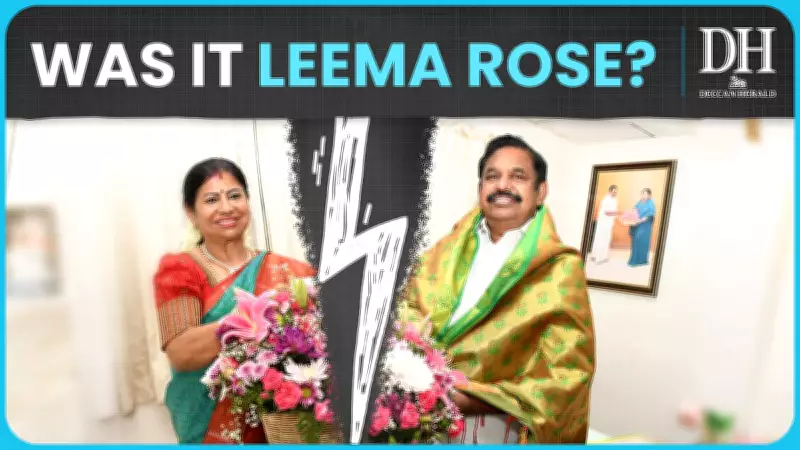
The recent internal turmoil within the All India Anna Dravida Munnetra Kazhagam (AIADMK) has raised questions about the roles played by Santiago Martin and Leema Rose Martin. The duo, known for their close association with the party leadership, are alleged to have contributed to the factionalism that ultimately led to a split.
Background of the Conflict
The AIADMK, once a formidable force in Tamil Nadu politics, has been grappling with internal dissent for months. The conflict escalated after the demise of former Chief Minister J. Jayalalithaa, leaving a leadership vacuum. Two major factions emerged, one led by Edappadi K. Palaniswami (EPS) and the other by O. Panneerselvam (OPS). However, the involvement of Martin and his wife Leema Rose has added a new dimension to the power struggle.
Santiago Martin's Influence
Santiago Martin, a businessman with significant political connections, is believed to have wielded considerable influence over party decisions. Reports suggest that he used his financial clout to sway key members, creating a rift between the EPS and OPS camps. His alleged interference in party affairs is seen as a catalyst for the breakdown of unity.

Leema Rose Martin's Role
Leema Rose Martin, known for her active participation in party activities, is accused of orchestrating a campaign against certain leaders. Sources claim that she worked behind the scenes to consolidate support for one faction, further deepening the divide. Her actions are said to have undermined the party's collective decision-making process.
Impact on the Party
The Martins' involvement has had a profound impact on the AIADMK's stability. The party, which was already struggling to maintain its identity post-Jayalalithaa, saw a significant erosion of trust among its members. The internal bickering has not only weakened the party's organizational structure but also damaged its electoral prospects.
Reactions from Leaders
Both EPS and OPS have publicly expressed concerns about external interference. While EPS has called for a thorough investigation into the Martins' activities, OPS has accused them of being a disruptive force. The party's rank and file remain divided, with many calling for a purge of elements that are not loyal to the party's core values.
Conclusion
The AIADMK's current predicament highlights the dangers of allowing external influences to dictate internal politics. The Martins' alleged role in the party's split underscores the need for transparency and accountability in political organizations. As the party attempts to rebuild, it must address these issues to restore its former glory.






