

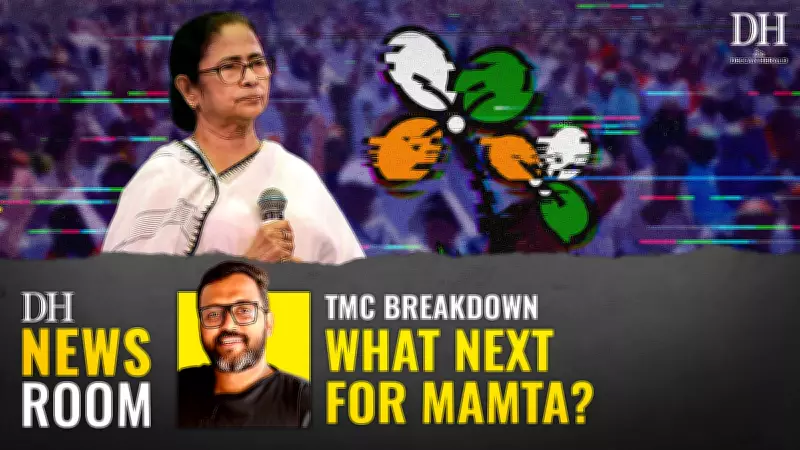
Internal Strife Deepens Within TMC
The Trinamool Congress (TMC), led by West Bengal Chief Minister Mamata Banerjee, is experiencing significant internal turmoil as factionalism and rebellion threaten the party's unity. Several senior leaders have expressed discontent, with some even hinting at leaving the party. This internal crisis comes at a critical time ahead of the 2024 Lok Sabha elections, where the TMC aims to expand its national footprint.
Key Leaders Express Discontent
Prominent TMC leaders, including former ministers and MPs, have publicly aired grievances over the party's functioning. Some have accused the leadership of ignoring grassroots workers and favouring a select group of insiders. For instance, former minister Rajib Banerjee, who recently rejoined the party after a brief stint with the BJP, has reportedly expressed dissatisfaction with the lack of decision-making power. Similarly, MP Saugata Roy has criticized the party's organizational structure, calling for more inclusive discussions.
Factionalism and Rebellion
Reports indicate the emergence of at least three distinct factions within the TMC: one loyal to Mamata Banerjee, another supporting senior leader Abhishek Banerjee, and a third led by a group of old-guard leaders. This factionalism has led to clashes over candidate selection for the upcoming panchayat elections, with multiple leaders threatening to contest as independents if denied tickets. According to a party insider, "The infighting has reached a point where decisions are being stalled, and the leadership is struggling to maintain control."

Impact on 2024 Lok Sabha Elections
The internal strife could undermine the TMC's performance in the 2024 general elections. The party, which won 22 of 42 Lok Sabha seats in West Bengal in 2019, is hoping to improve its tally and emerge as a key opposition force nationally. However, political analysts warn that continued infighting may benefit the BJP, which has been aggressively trying to expand its presence in the state. "If the TMC fails to resolve its internal issues, it could lose ground to the BJP, especially in rural areas where the party's grassroots network is weakening," said a Kolkata-based political commentator.
Mamata Banerjee's Response
Chief Minister Mamata Banerjee has sought to downplay the dissent, characterizing it as "healthy democracy within the party." In a recent speech, she urged party workers to focus on development and warned against anti-party activities. She also reshuffled some district-level posts to appease disgruntled leaders. However, critics argue that these measures are insufficient to address the deep-rooted factionalism. A senior TMC leader, speaking anonymously, said, "The high command is aware of the problem but is reluctant to take strong action against influential rebels for fear of losing electoral support."
Historical Context and Future Outlook
The TMC has a history of internal conflicts, but the current crisis is seen as particularly severe. The party's rise to power in 2011 was built on a coalition of diverse interests, which has become increasingly difficult to manage. With the BJP making inroads into West Bengal, the TMC faces the challenge of balancing internal democracy with the need for a unified front. As the 2024 elections approach, the party's ability to contain the rebellion will be crucial. Political observers suggest that if the factionalism continues, it could lead to a significant exodus of leaders, weakening the TMC's organizational strength.






