Saim Ayub's Pivotal Spell Shifts Momentum in Pakistan's Favor During T20 World Cup Clash
India arrived in Colombo with strategic preparations focused on countering Pakistan's Usman Tariq, but it was the unexpected brilliance of Saim Ayub that significantly altered the game's trajectory in Pakistan's favor during their high-stakes T20 World Cup encounter on Sunday. Ayub's masterful bowling spell effectively checked India's aggressive progress at a critical juncture, showcasing his ability to deliver under pressure on the global stage.
Ayub's Decisive Wickets Disrupt India's Batting Rhythm
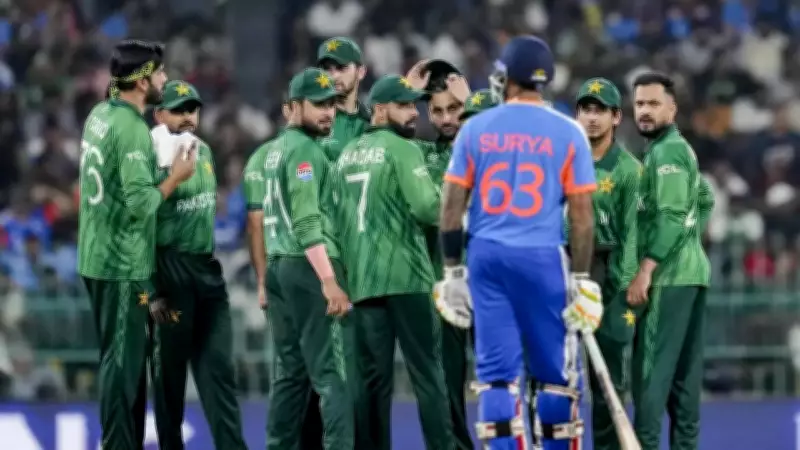
Saim Ayub initiated his impactful performance by removing the dangerous Ishan Kishan, who had been setting a blistering pace for the Indian innings with his aggressive stroke play. Just when India appeared poised to accelerate for a late-innings push, Ayub returned to dismiss Tilak Varma, who was beaten on the sweep and fell for 25 runs from 24 deliveries. The momentum shift became even more pronounced when Hardik Pandya entered the crease with clear attacking intent.
Ayub bowled a clever carrom ball that took a thick outside edge as Pandya attempted an ambitious big shot, resulting in a golden duck dismissal caught at long-off. This crucial wicket left India struggling at 126 for 4 in just 14.3 overs, significantly hampering their ability to post a formidable total. Ayub came agonizingly close to completing a hat-trick, delivering a ball with impressive loop and dip that pitched on leg stump and turned sharply past Shivam Dube's defense, bouncing over the stumps. Pakistan's subsequent review for a caught behind appeal proved unsuccessful as replays confirmed no edge was involved.

Statistical Excellence and Match Context
Saim Ayub concluded his spell with exceptional figures of three wickets while conceding only 25 runs across his four overs, demonstrating remarkable control and wicket-taking ability under pressure. Earlier in the innings, India had suffered an early setback when Abhishek Sharma was dismissed for his second consecutive duck in World Cup appearances, falling to Salman Ali Agha's bowling and caught at mid-on by Shaheen Shah Afridi in the very first over.
Despite this early loss, Ishan Kishan ensured the innings maintained momentum by recording the third-fastest fifty in India-Pakistan T20 International history. Kishan reached his half-century in just 27 balls, achieving the milestone with a boundary off Abrar Ahmed's second delivery during the seventh over. His explosive innings of 77 runs from 40 balls provided India with a solid foundation before Ayub's intervention changed the course of the match.
Fastest Fifties in India-Pakistan T20 Internationals (by balls faced):- 23 balls – Mohammad Hafeez, Ahmedabad, 2012
- 24 balls – Abhishek Sharma, Dubai, 2025
- 27 balls – Ishan Kishan, Colombo (RPS), 2026*
- 29 balls – Yuvraj Singh, Ahmedabad, 2012
Pitch Conditions and Tactical Nuances
The playing surface at Colombo's R. Premadasa Stadium did not appear conducive to exceptionally high totals, prompting both teams to adapt their strategies accordingly. Pakistan employed an unusual tactical approach by bowling five overs of spin during the powerplay phase, marking only the thirteenth instance in T20 World Cup history where a fifth over of spin has been utilized inside the powerplay restrictions. This strategic move reflected the challenging batting conditions and Pakistan's desire to exploit any assistance available from the pitch.
India concluded the powerplay at 52 for 1 after Abhishek Sharma's early dismissal. The match was preceded by a notable diplomatic moment when India captain Suryakumar Yadav refrained from shaking hands with Pakistan captain Salman Ali Agha during the toss ceremony, continuing the protocol established since the Asia Cup in Dubai the previous year. This subtle gesture underscored the intense rivalry and heightened emotions surrounding this historic cricketing contest between the neighboring nations.
The T20 World Cup 2026 continues to deliver thrilling encounters as teams compete for supremacy in the shortest format of the game, with this particular match highlighting how individual performances can dramatically influence outcomes in high-pressure situations.