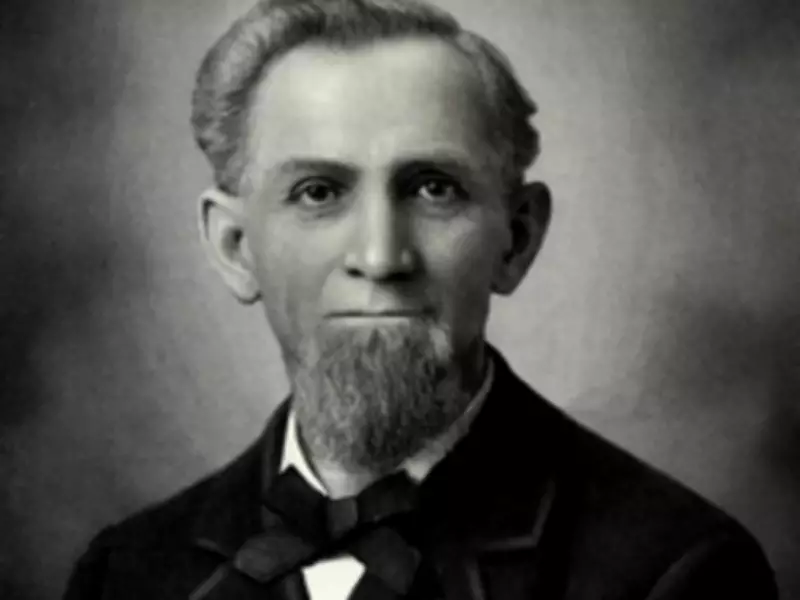
Each time you plug in your vacuum cleaner to clean your carpets, you are using technology that emerged from a last-ditch effort at self-preservation. In 1907, janitor James Murray Spangler tried to get through his night shift without triggering an asthma attack. The combination of a wooden soap box, a sewing machine motor, a broom handle, and a cloth pillowcase helped transform household cleaning.
Before Spangler’s Invention
Before Spangler’s invention, cleaning carpets by vacuum required a lot of physical effort. For years on end, people would take out their carpets, take them outside in the garden, stretch them on a rope, and beat them with a metal or wooden paddle. Although there were some mechanical cleaners and large horse-drawn vacuum cleaners, they were generally inefficient for household use.
The Desperate Janitor and His Asthma
By 1907, Spangler was nearly 59 and working at the Zollinger Department Store. Cleaning the store floor with a normal mechanical carpet sweeper produced a lot of dust and left Spangler wheezing for breath. Knowing that his job was ruining his health, he set out to find a way to collect dust without releasing it into the air.

As an inventive handyman who had filed unsuccessful agricultural patents before, Spangler was mechanically inclined enough to solve this problem. He collected a strange collection of junk parts from around the store and from his home. He used the old sewing machine motor to drive a fan and rotating brush and enclosed all this into a wooden soap box. He fastened a broomstick on top as a handle and a sateen pillowcase on the back side for exhaust.
The prototype worked. The revolving brush removed dirt from the carpet fibers, while the fan drew dust into the pillowcase. According to a historical account published by the National Inventors Hall of Fame, this rather primitive prototype turned out to be an important point in time since Spangler's invention became the first portable vacuum cleaner that successfully incorporated a cloth filter bag as well as useful cleaning attachments.
An Invention That No One Buys
Spangler refined his invention by replacing the wooden soap box with a better casing and patented his portable electric “suction sweeper.” He believed the invention would help people avoid the tedium of household cleaning. In fact, he went on to establish the Electric Suction Sweeper Company for manufacturing the product.
Like many inventors, Spangler lacked the means to turn it into a successful venture. When his business ran into bankruptcy, Spangler offered one of the machines to his cousin Susan Hoover.
Introducing the Hoover Empire
Susan Hoover had an affinity for the machine, which she presented to her husband, William Henry Hoover, who was a successful leather merchant, dealing in manufacturing horse collars and saddles. William Hoover was a shrewd businessman who could see the impact that the increasing number of automobiles was having on his established leather business.
According to The Guardian newspaper, William Hoover purchased the invention patent from the poor inventor who gave him the finance and marketing plan required to make it a global success. Hoover kept Spangler as a superintendent for all daily factory activities, so the inventor was able to witness his invention on a grand scale. The business grew quickly through demonstrations and free trial of the product at homes and was renamed the Hoover Company in 1922.
Spangler’s invention had a major effect on domestic life. With the broom and rug beater replaced, household chores took less time and became easier for many families. It is unfortunate that Spangler passed away in 1915 just before his company became so successful throughout the world.