Varanasi: In the era of 'One Nation, One Syllabus,' the proposed new regulations of the National Commission for Allied and Healthcare Professions (NCAHP) appear to have excluded Home Science from nutrition and dietetics education, giving rise to fears that thousands may lose their professional recognition and hospital jobs.
Panel Discussion Addresses Concerns
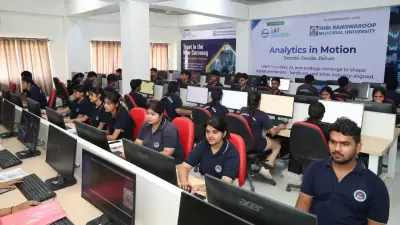
To address this apprehension, the Human Science Association of India (HSAI), along with the Department of Home Science at Mahila Mahavidyalaya, Banaras Hindu University, recently convened a one-day national panel discussion. The dialogue, attended by leading educators from across the country, revealed a stark reality: the NCAHP framework, if implemented without nuance, may fracture the very ecosystem it seeks to unify.
Historical Advocacy and Current Ambiguity
President of HSAI, Prof Madhu Sharan, reminded participants that the association has been advocating for home science since 1940. However, now students and teachers in state, Central, and ICAR-affiliated universities face ambiguity over the future of their food and nutrition programmes. The panel discussion was not to oppose NCAHP but to ensure its implementation does not marginalise an entire generation of graduates.

Roadmap for Integration
Prof Jagmeet Madan of the National Nutrition Science Professionals Council stressed the need for a roadmap to integrate curricula operating under UGC, ICAR, and state systems without disruption. The HSAI argued that certain specialised domains within food and nutrition should remain outside NCAHP’s scope.
Warning from Experts
Prof Pulkit Mathur of Lady Irwin College, Delhi University, warned that if nutrition science is separated entirely from home science, the latter will struggle to retain relevance. He highlighted practical and administrative difficulties Central universities face in adopting the NCAHP curriculum. The transition cannot be imposed across all higher education institutions without protecting the future of students who may lose jobs.
Questions on Career Opportunities
Prof Usha Antony, former head of department at TNJFU, Chennai, questioned: if recognition as a nutrition professional is restricted solely to Bachelor in Nutrition and Dietetics (BND) graduates from medical colleges, will career opportunities for students in state-affiliated colleges shrink? She said it must be evaluated whether the new curriculum would restrict home science students’ scope to hospital dietetics.
Practical Difficulties and Academic Identity
Prof Mamoni Das of Assam Agricultural University said there would be practical difficulties in aligning existing curricula and infrastructure with NCAHP regulations and clarified that to preserve their distinct academic identity, food science and related technical fields must be excluded from NCAHP’s scope. The panel concluded that students currently enrolled must be protected through bridge courses or equivalence criteria.