NEW DELHI: A larger question bank, more paper-setters and restrictions ensuring nobody can know or see the final paper formed the core of the redesigned question-setting system for the June 21 NEET-UG retest. This high-security process was undertaken following a leak that led to the medical entrance exam's cancellation in May.
National Testing Agency (NTA) significantly expanded the pool from which the final 180-question paper was drawn and increased the number of experts drafting questions, sources said. The aim was to reduce the value of partial access at the source. Under the revised system, a question written by an expert could be used in the retest, kept for another exam, or not used at all.
The shift was from guarding only the printed paper to guarding paper-making. If questions come from a small pool, anyone who sees a part of these can claim to know the exam. But if the pool is larger, little can be inferred.

The cancelled May 3 paper reportedly overlapped with a pre-circulated guess paper on more than 120 questions. 'If the pool is small, even a so-called guess paper can come dangerously close to the final paper,' an official familiar with the process said.
Officials said experts were asked to contribute to the central question bank without being told how, when or whether their questions would be used in the final NEET paper. In this system, designed to ensure that no individual has a complete view of questions, experts don't even know if their submitted questions are meant for NEET, JEE or another test, or for which sitting. The new architecture strips value from any insider who claims to 'know' the paper.
Investigators are examining whether the breach took place during the confidential paper-setting process, and not merely during transport or at an exam centre.
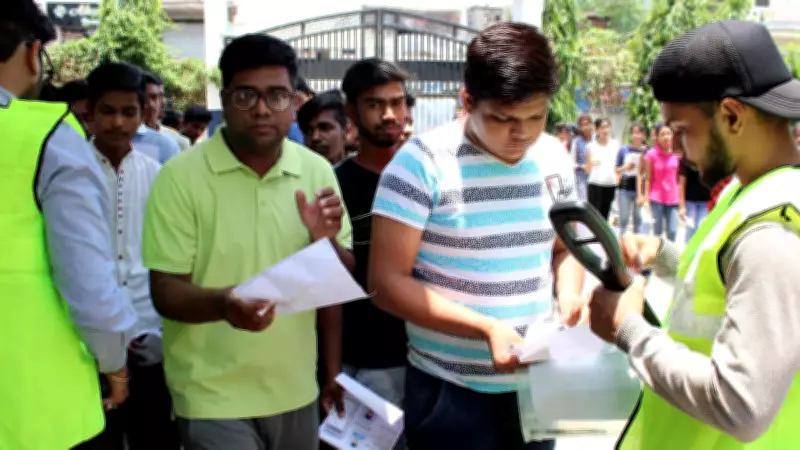
Security around delivery has also been overhauled in parallel. Over five lakh personnel will be deployed, with CCTV and AI-based surveillance at centres, Aadhaar biometric verification of candidates, and question papers flown in by the IAF. Officials said the larger bank was also the groundwork for the shift of NEET-UG to computer-based testing from 2027.
Get the latest India news and live updates. Download the TOI App.
About the Author
Manash Pratim Gohain is a seasoned journalist with over two decades at The Times of India, where he has built a rich body of work spanning education policy, politics, and governance. Renowned for his incisive coverage of the National Education Policy (NEP) 2020, accreditation reforms, and skilling initiatives, he has also reported on student politics, urban policy, and social movements. His political reportage, both reflective and news-driven, adds depth to his writing, bridging policy with public impact. Through his 2,500 articles and related outlets, he has emerged as a trusted voice in national discourse, particularly in linking education reform to broader societal change.