Within the space of six months, two films—Dhurandhar and Main Vaapas Aaunga—have exploded on Indian cinema screens. Apart from being as different as chalk from cheese, they raise a persistent question: Why does Pakistan remain a central obsession in the minds of average North Indians?
To borrow a concept from India’s best-known psychologist, Ashis Nandy, Pakistan can be described as the perfect “intimate enemy.” Separated at birth in 1947, a division so violent and brutal that it colored everything that followed, only two paths remained for the two countries to come to terms with each other’s existence: mutual forgiveness or defiant hostility. Both ideas have been explored at various times as India enters its 80th year of independence. Imtiaz Ali attempts the former with Main Vaapas Aaunga, while Aditya Dhar pursues the latter with Dhurandhar. Both succeed in parts, but never completely.
For decades, it was more or less acceptable when India won wars, proxy wars, and conflicts with Pakistan—both on and off the field. India paid a heavy price each time, losing civilians and soldiers to terror acts, especially in border states like Punjab and Jammu & Kashmir. These acts cut deep because they reopened wounds that never fully healed. That is why the national catharsis of defeating Pakistan, including in cricket, felt so rewarding.

India would bounce back, we knew. We were the bigger country with a larger GDP, IT companies, and Bollywood. Unlike the Islamic Republic, we were a functioning democracy, warts and all, and definitely not, as Fahmida Riaz claimed, “like each other.” She once said in 1992, after the Babri Masjid demolition, “Tum bilkul hum jaise nikle, bhai.” Not at all, behen.
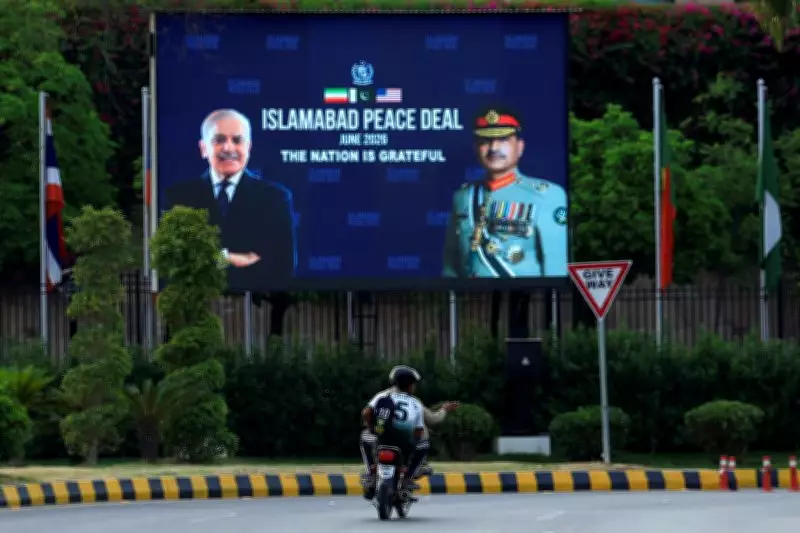
Ashis Nandy might ask why we care so much whether we are like each other, or why it matters if Pakistan’s Army Chief Asim Munir is Donald Trump’s “favorite Field Marshal,” or whether the Memorandum of Understanding between the US and Iran is called the Islamabad MoU (the Iranians call it that, the Americans do not), or that Pakistan is officially described as a “mediator” in the US-Iran crisis.
The fact is, Pakistan has superbly used the West Asia crisis to expand its influence abroad. It has smartly leveraged its intimacy with China, Saudi Arabia, and Iran to broker a global agreement—even if it needed Qatar in the final weeks to push the deal over the finish line. Pakistan called upon all its relationships to deliver: it represented Iran in Washington DC, a role it has held since the 1979 Revolution, and extracted every bit of benefit from that tie. It drew on its client-state relationship with China to oil the wheels with Russia and others. It curried favor with Saudi Arabia, a key US ally with which it shares an “iron brother” bond, to tighten screws when necessary.
The Pakistanis played it perfectly—as weak states with everything to lose often do. This means India must acknowledge Rawalpindi’s role, because it was Field Marshal Munir who ran the operation with well-trained diplomats in his Foreign Office, and then move on. That is what strong states with everything to gain do.
Several lessons emerge from this West Asia crisis. First, nations must talk to all sides to exercise leverage, as Pakistan did. Second, leaders must have the courage—like Trump—to cut loose the losing side (Israel) if it discolors the larger picture, and cut a deal with the winner (Iran). Trump understood his economy was bruising and midterm elections loomed in November, so he could not let ego stand in the way of national interest. Third, as the sixth-largest economy in the world, India should not bristle if Pakistan wants to crow from the rooftops—every rooster has its day. India measures itself with unique yardsticks: its science establishments that sent the Vikram Lander into space, its ability to feed 1.4 billion people, its IT companies, and Bollywood. Why compare yourself to a tiny country on one side of your border when you are two different countries, as different as chalk and cheese?

The wonderful thing about movies is that they reflect not only the director’s vision but also allow viewers to see themselves. In Dhurandhar, we saw how Lyari looks, even if we have never been there (Pakistanis watching on illegal cable TV were taken aback by its realism). In the touching love story Main Vaapas Aaunga, Imtiaz Ali allows a peek into the rear-view mirror, so that 80-year-old memories of Punjabi refugee families can finally achieve some closure. (It helps that Diljit Dosanjh’s acting is so poor, you never suspend disbelief and forget you are watching a movie.)
Pakistan is surely a lovely country to visit. Many of us have friends and family there. We would like to take our children to gaze at the ruins of Mohenjo-daro and Harappa for a first-class history lesson, and wash our feet in the warm waters of the Arabian Sea off Clifton. But let us not forget that the nation is ruled by the barely disguised fist of its military establishment. Its Field Marshal is not just Trump’s favorite pet this week; he has kept former Prime Minister Imran Khan in Rawalpindi’s Adiala jail since 2023 on likely trumped-up corruption charges. So watch both Dhurandhar and Main Vaapas Aaunga, but know that neither tells the full story.
One more thing: On the night after the US-Iran deal was signed, the Afghan Taliban used its ragtag air force to bomb terror training camps inside Pakistan. See the jigsaw puzzle pieces falling into place? This is where the great game takes over.