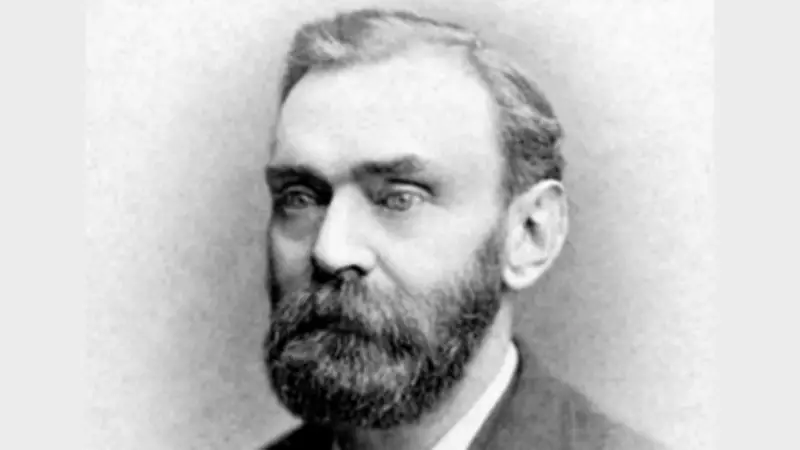
Love, feelings and human connection have always been among the most complex aspects of life. For centuries, philosophers, scientists, writers and thinkers have sought to explain why people feel affection, attachment, trust or distance. Alfred Nobel made a profound observation on this topic when he said, "A heart can no more be forced to love than a stomach can be forced to digest food by persuasion."
The quote may seem simple at first, but it conveys a deeply human truth. Nobel draws a parallel between emotional bonds and physical processes, emphasizing that natural phenomena cannot be coerced. Just as words alone cannot compel the body to digest food, pressure, obligation or force cannot make the heart feel love. Genuine feelings arise naturally and cannot be manufactured through social expectation or persuasion.
The Meaning Behind Alfred Nobel's Quote
The beauty of the quote lies in its simplicity. Nobel uses a comparison that everyone can understand. Digestion is an automatic biological process that cannot be initiated by argument or demand. Similarly, emotional attachment cannot be created simply because someone desires it. The quote highlights the difference between external pressure and internal feeling. Human emotions are deeply personal and often unpredictable. Love, trust and affection typically grow from shared experiences, understanding, care and emotional connection, not from obligation.

Nobel's words also reflect an important psychological truth: attempting to force feelings often leads to resistance rather than intimacy. Whether in personal relationships or social systems, genuine emotional connection cannot flourish under pressure. This observation remains relevant as many people continue to struggle with expectations surrounding relationships, family approval, social obligations and emotional conformity.
Who Was Alfred Nobel Beyond the Nobel Prize?
Most people know Alfred Nobel as the founder of the Nobel Prize, one of the world's most prestigious international awards. However, Nobel's own life was far more complex than commonly known. Born in 1833, he was a Swedish inventor, chemist, engineer, businessman and writer. During his lifetime, he held over 350 patents and became famous for inventing dynamite, a safer method of handling nitroglycerin for industrial purposes like mining and construction.
Dynamite revolutionized engineering and infrastructure, but it also gained a reputation as a weapon of war and destruction. This dual legacy profoundly impacted Nobel's life. In 1888, a French newspaper mistakenly published an obituary for him (his brother Ludvig had died), referring to him as "the merchant of death." It is believed that reading how the world might remember him deeply affected Nobel. Many historians think this experience influenced his decision to establish the Nobel Prizes in his will, dedicating his wealth to achievements that benefit humanity in science, literature, medicine and peace.
Why Nobel's Quote Still Resonates Today
Modern society places significant pressure on relationships and emotional expectations. Social norms often dictate that people should feel affection, loyalty, admiration or emotional closeness. Nobel's quote challenges this notion by recognizing that genuine feelings cannot be forced by social pressure alone. This message is particularly relevant in today's world, where relationships are increasingly shaped by digital communication, public image and external validation. Social media often presents idealized versions of love and emotional connection, leading to unrealistic expectations.
Nobel's words encourage a focus on emotional honesty. True affection is not negotiable like a business deal; it arises naturally from trust, understanding and emotional compatibility. Human emotions cannot always be rationalized, which is why the quote remains powerful. It acknowledges the complexity of emotion, which psychologists have studied as a combination of biology, memory, environment and personal experience. Emotional attachments transcend simple decision-making.

This reality is reflected in Nobel's analogy of love and digestion. Some human processes are natural and cannot be fully controlled by persuasion or reason. Forced relationships, emotional manipulation and social pressure often fail to create genuine connections. The emotional cost of forced expectations is significant. In many societies, personal relationships have been burdened with expectations, and people have been advised to maintain appearances regardless of their true feelings. Nobel's quote gently contradicts this by stating that feelings cannot be fabricated through pressure. Modern psychology recognizes that emotional dishonesty can lead to stress, anxiety, resentment and isolation. Healthy relationships are typically based on mutual understanding and voluntary emotional connection, not obligation alone.
The Importance of Authenticity in Relationships
Nobel's words also highlight the significance of honesty in human relations. Real relationships usually emerge when people feel emotionally safe enough to express their truth. Trust and emotional closeness are rarely sustainable when based on performance or expectation. In an era where authenticity is increasingly valued, many people are weary of constant social performance and digital presentation. Nobel's quote reminds readers that emotions remain deeply human and cannot be fully controlled by social systems or persuasion.
Alfred Nobel's Life of Contradictions
Nobel's life was filled with contradictions. He was a scientist whose invention transformed industry but also became associated with war. He amassed great wealth but reportedly experienced loneliness and personal isolation. He never married and spent much of his life traveling for business and scientific work. Historians describe him as intellectually brilliant but emotionally reserved. His writings and personal letters reveal extensive reflection on morality, relationships and human nature. This quote, among others, shows a reflective and philosophical side of Nobel that is often overshadowed by his scientific achievements.
The Connection Between Science and Emotion
Although Nobel is primarily remembered for science and engineering, his quote demonstrates how scientific thinkers can also reflect on emotional life. Science typically focuses on understanding physical systems and observable phenomena, but many great scientists have explored questions of meaning, emotion, morality and human behavior. Nobel's analogy between digestion and emotional attachment exemplifies a scientific mindset applied to human relationships. He conveys an emotional truth through a biological process. The quote's enduring appeal stems from its blend of rational observation and emotional insight.
Why People Still Struggle with Emotional Control
Despite advances in psychology and communication, people still frequently try to control emotions through persuasion, pressure or expectation. Parents may push children into certain relationships or career choices. Social systems may promote emotional conformity. Public opinion can influence how people express personal feelings. However, as Nobel's quote suggests, emotional authenticity cannot be demanded into existence. This tension between feelings and expectations remains a common struggle.
Love as a Natural Human Experience
One of the most enduring ideas in Nobel's quote is that love is most effective when allowed to grow naturally. Healthy emotional attachment typically develops over time through shared experiences, trust, vulnerability and mutual care. Attempting to force or accelerate emotional closeness often creates instability. Literature, psychology and philosophy all support this view: genuine human connection emerges organically, not through control. Nobel expressed this truth in the simplest language, which is why the quote remains relevant across generations.
Other Famous Quotes by Alfred Nobel
- "If I have a thousand ideas and only one turns out to be good, I am satisfied."
- "Second to agriculture, humbug is the biggest industry of our age."
- "Contentment is the only real wealth."
- "Good wishes alone will not ensure peace."
- "Hope is nature's veil for hiding truth's nakedness."
- "Nature is a good place to begin studying chemistry."
How the Nobel Legacy Continues Today
Today, the name Nobel is known worldwide thanks to the Nobel Prize, awarded annually for outstanding achievements in physics, chemistry, medicine, literature, peace and economic sciences. The prizes recognize work that has greatly benefited humanity. Nobel's decision to establish these prizes revolutionized global recognition of scientific, cultural and humanitarian achievements. Each year, the Nobel Prize symbolizes excellence, discovery and global impact. Beyond the awards, Nobel's personal musings remain of interest because they reveal a more philosophical and human side of the inventor.
Why Simple Quotes Often Leave the Deepest Impact
Nobel's quote is memorable because it expresses a complex emotional truth using ordinary human experiences. People understand hunger, digestion, love and emotional disappointment. Nobel weaves these familiar experiences together in a way that feels immediate and sincere. Unlike abstract philosophy, the quote is grounded in everyday life. It acknowledges something most people learn through experience: emotions cannot always be controlled by logic or persuasion. This simple insight gives the quote its enduring emotional power.
The Lasting Relevance of Nobel's Words
More than a century after Alfred Nobel's death, his words still resonate because human emotions have not fundamentally changed. People still seek love, acceptance, emotional security and genuine connection. Many continue to struggle with expectations placed on relationships by society, family or personal pressure. Nobel's quote subtly reminds readers that genuine love cannot be ordered or bargained into existence; it must happen spontaneously, truthfully and voluntarily. This understanding remains deeply relevant in every generation.
About the Author
The TOI Science Desk is an inquisitive team of journalists who tirelessly explore the realms of discovery to curate a captivating collection of news, features and articles from the vast world of science for readers of The Times of India. They serve as a scientific companion, delivering a daily dose of wonder and enlightenment. Whether covering genetic engineering, space exploration or artificial intelligence, the TOI Science Desk ensures readers stay connected to the pulse of the scientific world. They are not just reporters but storytellers of scientific narratives, committed to demystifying science and making it accessible and engaging for all backgrounds.