ARTPARK CEO Raghu Dharmaraju on Physical AI as India's Next Frontier
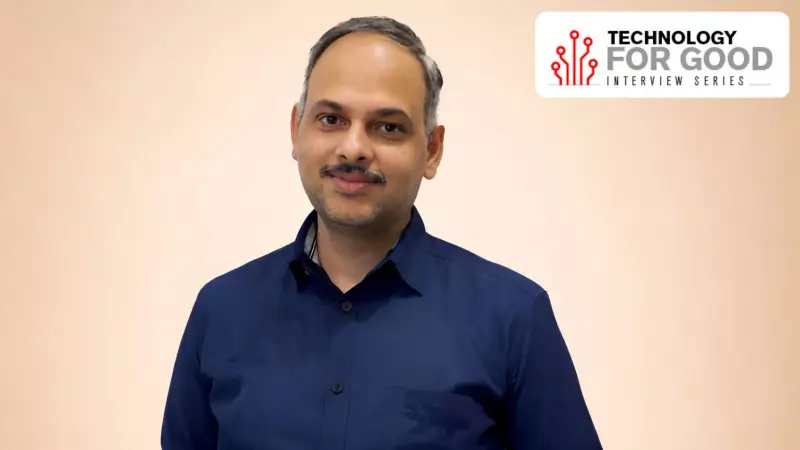
Raghu Dharmaraju, the CEO of ARTPARK (AI & Robotics Technology Park) at the Indian Institute of Science (IISc) in Bengaluru, has declared that Physical AI represents the next frontier in technological advancement, and his organization is actively embracing this challenge. In an exclusive interview, he elaborated on ARTPARK's mission, its innovative approach, and the transformative potential of AI and robotics in India.
ARTPARK's Genesis and Unique Model
Seed-funded by the Government of India under the National Mission on Interdisciplinary Cyber-Physical Systems (NM-ICPS), ARTPARK serves as a pivotal hub for fostering innovations in artificial intelligence and robotics. By integrating researchers, startups, industry players, and government ecosystems, it drives deep-tech projects across critical sectors such as industrial automation, mobility, agriculture, healthcare, and education.
Dharmaraju, who holds a B.Tech from IIT Madras, an M.S. from the University of Massachusetts, Amherst, and an MBA from Cornell University, explained that ARTPARK operates as an innovation and venture builder, rather than a conventional incubator or accelerator. The organization initiates projects at early stages, often before full teams are formed, providing sustained support through grants to nurture concepts into viable ventures—whether for-profit startups or non-profit digital public goods.

Diverse Talent and Problem-Solving Approach
Contrary to assumptions, only about one-third of ARTPARK's talent funnel originates from IISc Bengaluru; the remainder is sourced from across India. The organization employs a multifaceted approach, blending ideas from innovators, industry demands, and government needs, particularly in defence and social impact areas like public health.
Dharmaraju highlighted that ARTPARK's programmes aim to elevate projects from Technology Readiness Level 3 or 4 to Level 6 or 7. This involves:
- Providing state-of-the-art facilities for robotics and AI prototyping, including a 5G testbed and GPU clusters.
- Facilitating co-creation efforts with potential customers through mentorship and structured collaborations.
- Offering substantial pre-commercial R&D funding, recognizing that deep-tech endeavors require investments of several crores.
Showcasing Impactful Startups
ARTPARK's portfolio includes numerous startups addressing both commercial and social challenges. Notable examples include:
- Twara Robotics: Develops robotic arms for manufacturing, with components like actuators and soft grippers.
- Comrado Aerospace: Built a hybrid vertical take-off and landing drone for surveillance, now in pilot deployment with defence forces.
- ZenteIQ: Creates scientific foundation models for engineering design, winning the IndiaAI Mission's foundation model challenge.
- Qosmic Labs: Innovates optical, laser-based satellite communications to enhance throughput.
- FLO Mobility: Designs autonomous mobile robots for material handling on construction sites.
- DexSent Robotics: Works on dexterous grippers for precise object manipulation in manufacturing.
On the social impact front, ARTPARK has developed a multi-lingual virtual assistant for frontline health workers, used in eastern Uttar Pradesh, and initiatives like Project Vaani for open-source speech datasets. Additionally, it collaborates with the Government of Karnataka on a dengue outbreak prediction system and heat-health risk models, emphasizing the need for continuous model updates due to changing environmental factors.
The Physical AI Challenge
Dharmaraju identified Physical AI as the core challenge ARTPARK is tackling. This involves embedding intelligence into physical systems like robots, enabling them to perform complex tasks such as washing dishes or folding clothes with adaptability. Unlike traditional methods reliant on precise instructions, Physical AI requires training through data, model architectures, and computational power, representing a significant leap towards Industry 5.0—a human-centred approach to AI integration.

Startups like Kinesthetiq and Strider Robotics, which develop quadruped robots for hazardous environments, exemplify this focus. Dharmaraju noted that while global research ecosystems offer open-source models, India must build its own capabilities in this strategically important domain.
Ecosystem Insights and Future Directions
Reflecting on India's AI and robotics landscape, Dharmaraju acknowledged the abundance of raw talent but pointed out gaps in facilities and substantive investments. ARTPARK's integrated support model—combining prototyping resources, expertise, funding, and talent—fills a unique void in the incubation ecosystem, which often lacks such comprehensive backing.
He concluded by reiterating ARTPARK's commitment to driving innovations that align with large-scale government programmes and national strategic interests, positioning India at the forefront of the Physical AI revolution.