

Divers tracing an ancient harbour wall near Alexandria were working in one of the Mediterranean's richest underwater archaeological zones. The waters of Aboukir Bay are closely linked to Thonis-Heracleion, the ancient Egyptian port city that sank beneath the sea more than a thousand years ago. This is significant because the seabed there is not an empty stretch of water but a sprawling archaeological landscape. Temple ruins, shipwrecks, inscriptions, ritual offerings and colossal sculptures have all been discovered beneath layers of sand and silt. In such an environment, a routine survey can quickly lead to something far more significant.
That is exactly what happened. While examining the remains of harbour structures, divers came across massive stone statues lying on the seabed. This discovery added to a growing body of evidence showing that Heracleion had once been a thriving city before disappearing beneath the Mediterranean.
What happened to the city of Heracleion?
A study in the Journal of Coastal Research identified extensive areas of land in the northern Nile Delta that were experiencing land subsidence, coastal erosion, and marine incursions. These processes rapidly transformed the region's geography, and it is noted that the collapse of Heracleion was not caused by a single catastrophic event. Rather, it resulted from a combination of natural forces acting over several centuries.

Built on waterlogged sediments near the mouth of the Nile, the city was particularly vulnerable to geological instability. As sea levels gradually rose and the ground beneath the city weakened, sections of land began to sink. Periodic flooding, earthquakes, and a phenomenon known as soil liquefaction, in which water-saturated ground loses its strength during seismic activity, likely accelerated the city's decline. Over time, buildings, temples, and harbour structures slipped beneath the water, and by the early centuries of the first millennium CE, much of Heracleion had disappeared beneath the Mediterranean Sea. This discovery in Aboukir Bay, a rich underwater archaeological zone, adds crucial evidence to the understanding of Thonis-Heracleion's former glory. The city, submerged over a thousand years ago due to land subsidence and coastal erosion, is revealing its secrets, offering insights into its religious importance and prosperity.
How did a dive lead to the discovery of a statue?
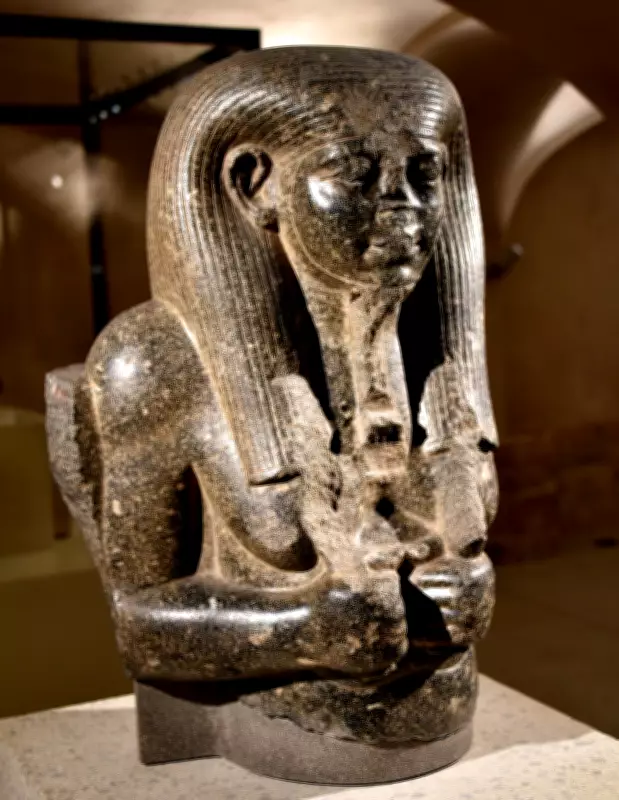
The discovery began with what appeared to be a large rock encrusted with salt and marine deposits. Once it was cleaned, researchers realised it was a fragment of a colossal statue of Hapi, the ancient Egyptian god of the Nile. Intrigued by the find, the excavation team used sonar mapping, satellite positioning systems, and underwater excavation techniques to investigate the surrounding seabed. As noted in a study by the University of Michigan, survey techniques such as remote sensing and imaging are crucial for identifying and interpreting submerged remains. In this context, what began as the examination of a seemingly ordinary object ultimately led researchers to uncover far more than they had anticipated: 16-foot-tall statues of a Ptolemaic king and queen.
The discovery was not entirely unexpected, given the nature of the site. Underwater archaeologists often trace stone alignments, monitor sediment shifts, and map submerged structures section by section. In such investigations, a search for one feature can easily lead to the discovery of another.
Why does the discovery of the Hapi statue matter?
The recovery of the Hapi statue is significant because it reveals far more than the existence of a once-thriving city. As one of the largest known representations of the Nile god, the sculpture reflects the wealth, religious importance, and political influence that Heracleion once possessed. In ancient Egyptian belief, Hapi personified the annual flooding of the Nile, the force that sustained agriculture, prosperity, and life itself. A monument of this scale, therefore, suggests that the city held a special connection to the river's sacred and economic significance.
That is part of what makes Heracleion so compelling. It is not merely a lost city recovered from the sea, but a place where history and legend come together.






