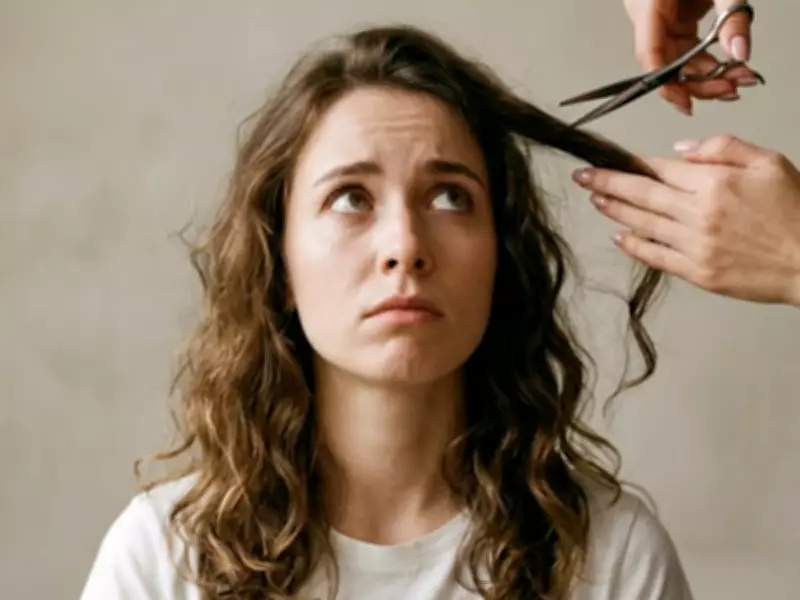
Have you ever wondered why the hair on your head can grow down to your waist, while the hair on your arms seems to stay at a constant length? This question has puzzled nearly everyone who has stood in front of a bathroom mirror. The answer does not lie in how often you trim your ends or what type of oil you use. It is actually hidden beneath your skin, inside the tiny, intricate production facility known as the hair follicle.
The Biological Clock Behind Hair Growth
Every hair on your body is on its own journey, driven by a biological clock that determines precisely when to grow and when to stop. Each strand is born in a hair follicle, where the magic occurs. At the base of the follicle, new hair cells rapidly grow in the root of the shaft. As these new cells form, they push older cells upward, acting like a conveyor belt. When the cells emerge from the skin's surface, they undergo a process called keratinisation, where they die, harden, and become the hair you style and groom. Since the visible hair is actually dead tissue, it cannot heal itself, making the health of the follicle critical for maintaining beautiful hair.
The reason your eyebrows do not grow long is that hair follows a cycle known as the growth phase, or anagen phase. Scientists refer to this as the anagen phase. A follicle produces cells for a specific duration depending on its location on the body. When that time ends, the follicle enters a resting period called the telogen phase. The hair shaft breaks down or is pushed out, resulting in natural shedding. The cycle then restarts, and new, healthy hair begins to grow.

The length of the growing phase is the main factor controlling hair length. Arm hair follicles are genetically programmed to stop functioning every few months, keeping arm hair short and manageable. In contrast, scalp follicles are designed to remain active for years, allowing hair to grow long. According to a comprehensive review published in the Journal of Cell Science, these cycles are regulated by complex signals that tell the hair follicle when to switch from growth to rest. The duration of the anagen phase determines hair length, with scalp follicles programmed for extended growth and arm hair follicles having shorter cycles.
Environmental Adaptations and the Science of Shedding
Humans shed hair in a sporadic, unpredictable manner, but animals operate more synchronously. Animals that shed have hair follicles that are in sync with one another. As seasons change, their follicles enter the rest phase together, causing hair to shed in large clumps. This is a defense mechanism that allows them to replace a heavy winter coat with a lighter summer one. Additionally, some animals can alter pigment production. In summer, their hair is filled with melanin, giving it a brown or earthy shade. As winter approaches, follicles stop producing pigment, resulting in an all-white coat that provides camouflage against snow.
Human hair biology is also influenced by our chemistry and environment. A study in the International Journal of Molecular Sciences highlights how various environmental factors and cellular stressors affect hair follicle health. Maintaining a healthy environment for these small organs is vital, as the hair follicle is one of the most metabolically active areas in the human body. Understanding that hair reflects deep biological processes helps us appreciate the intricate work our bodies do every day to keep us safe and in balance. If you notice a few strands of hair falling out, remember that your follicles are making way for new growth.