Vadodara Educator's WhatsApp Account Hijacked in Sophisticated Cyber Fraud
For Vadodara-based educator Pinal Desai, a routine day turned into a nightmare when a notice from the Maharashtra police arrived at his home two weeks ago. The official communication left him in a state of shock, alleging that his bank account had been implicated in fraudulent financial transactions and summoning him for immediate questioning by authorities.
The Shocking Discovery of Unauthorized WhatsApp Activity
When Desai presented himself before cybercrime officials in Navi Mumbai approximately ten days later, investigators revealed disturbing details. They informed him that a WhatsApp group had been created using his mobile number, and this group was allegedly being used to deceive individuals through fake investment schemes promising extraordinary returns.
"I had absolutely no knowledge about this group's existence or these fraudulent schemes," Desai explained to reporters. "It was only during the police interrogation that I realized my WhatsApp account had been compromised by cyber criminals who created this group and added numerous participants without my consent."

How the Elaborate Investment Scam Operated
The 53-year-old educator learned that the fraudsters had been regularly posting details of various investment opportunities within the illicit WhatsApp group. They provided bank account numbers where members were encouraged to deposit money with guarantees of unusually high profits.
According to police documentation, one woman from Maharashtra who was added to this fraudulent group ultimately lost nearly Rs 84 lakh to the sophisticated scam operation before authorities intervened.
Forensic Investigation Clears Innocent Educator
Desai cooperated fully with the investigation, providing all requested information and even surrendering his mobile device for comprehensive forensic analysis. Police conducted an extensive technical examination of his smartphone before returning it with confirmation that the device showed no evidence of illegal activity.
"The investigators completed a thorough forensic scan and verified that my phone was completely clean," Desai stated. "They assured me I could leave and would only contact me again if additional information became necessary for their ongoing investigation."
The Growing Threat of 'Ghost Pairing' Cyber Attacks
Desai expressed deep concern about how easily someone can operate scams using another person's identity without their knowledge. "This situation demonstrates how completely unaware victims can be while criminals send messages and execute frauds using their phone numbers," he emphasized. "Such incidents can create serious legal complications for innocent individuals who have done nothing wrong."
When questioned about potential security lapses, Desai acknowledged that while he generally maintains caution with digital communications, he might have accidentally clicked on an unfamiliar link at some point, potentially providing the entry point for hackers.
Cyber Security Expert Explains 'Ghost Pairing' Technique
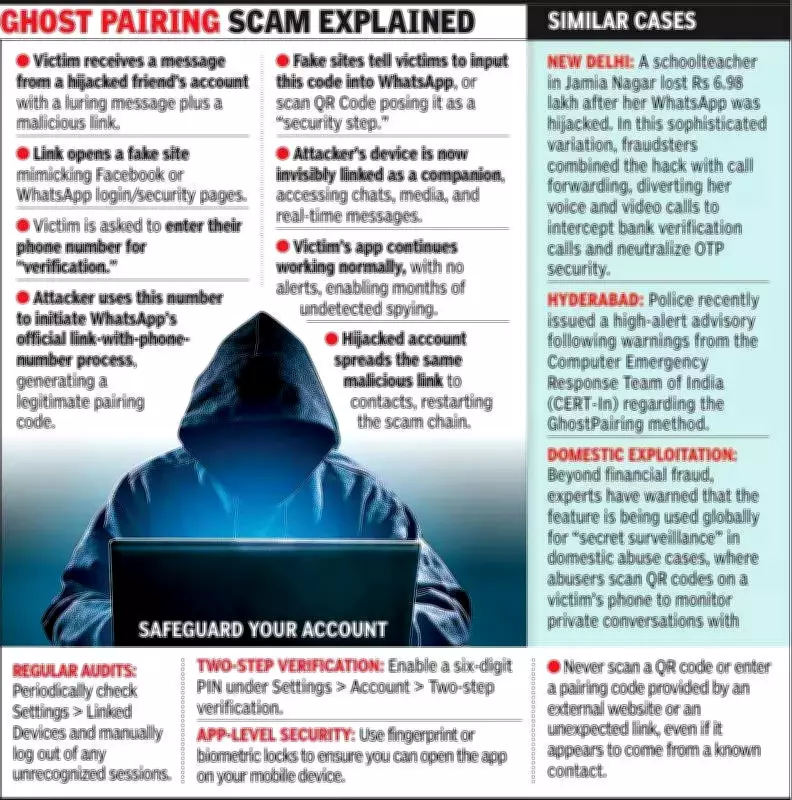
Cyber security specialist Mayur Bhusawalkar detailed the method employed in such attacks, known technically as "ghost pairing." "Scammers typically send deceptive messages like 'check this photo' accompanied by malicious links," Bhusawalkar explained. "Once users click these links, fraudsters gain remote access to their WhatsApp accounts. Victims often remain completely unaware that someone else is simultaneously operating their account from another location."
The expert emphasized crucial preventive measures: "Users must activate all available security features on WhatsApp, particularly two-step verification, to prevent unauthorized access to their accounts." He further noted that government agencies have issued multiple advisories warning citizens about this emerging form of cyber fraud that targets digital communication platforms.

This incident highlights the increasing sophistication of cyber criminals who exploit popular messaging applications to execute financial frauds while implicating innocent individuals. Authorities continue to investigate the broader network behind this particular scam operation as digital security experts urge enhanced vigilance among all messaging platform users.