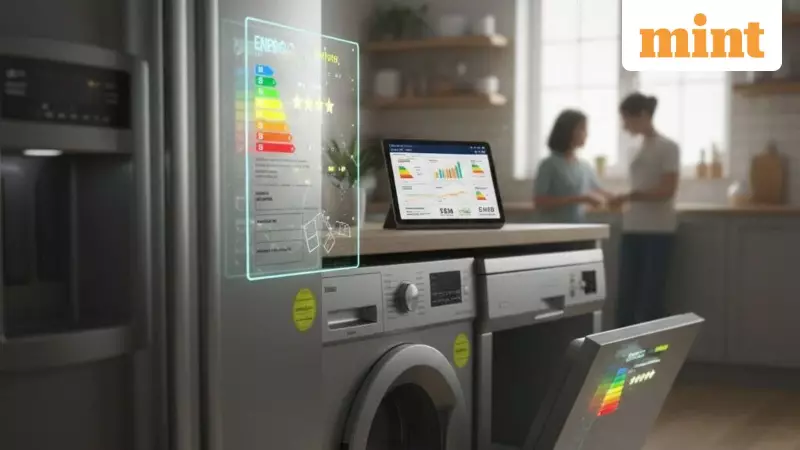
When you step into an appliance store in India, your eyes are immediately drawn to the bright star labels adorning every refrigerator and air conditioner. Promising significant savings on your electricity bills, these ratings from the Bureau of Energy Efficiency (BEE) have become a primary guide for millions of buyers. But how much should you truly rely on these stars when making your next big purchase?
The Reality Behind the Star Ratings
The BEE star ratings are not arbitrary. They are the result of rigorous lab tests and data provided by manufacturers, all conducted under tightly controlled conditions. For key appliances like air conditioners, the system uses the Indian Seasonal Energy Efficiency Ratio (ISEER), a metric designed to account for India's unique climate and typical usage patterns.
However, this is where the first gap appears. Your home is not a laboratory. Individual usage habits—how often you run the appliance, the settings you choose, and how well you maintain it—play a colossal role in determining actual energy consumption. In practice, two different models boasting a five-star rating can deliver sharply different results in your household, making the label an imperfect predictor of your monthly bill.

The Expiry Date You Didn't Know About
A critical, yet often overlooked, aspect of the BEE system is its dynamic nature. The rating tables are not set in stone; they are revised every two to four years to reflect advancing technology and higher efficiency standards.
This means an appliance you buy today has a rating with a built-in expiry date. A refrigerator sporting a five-star label in 2024 could be considered only a three-star performer under the new standards of 2026, even though the machine itself hasn't changed a bit. This 'downgrading' of ratings can mislead consumers who assume the efficiency claim is permanent.
What the Star Label Doesn't Tell You
The energy star label provides valuable information, including the model number, manufacturer, and capacity. Newer labels even feature a QR code for verification. The ratings themselves are calculated based on annual power draw and the energy saved compared to a minimum benchmark.
Yet, the label cannot account for real-world variables. Overloading your washing machine, neglecting filter cleaning in your AC, or experiencing frequent voltage swings will all push your energy consumption far beyond the laboratory results. Furthermore, the ratings are category-specific, meaning you cannot directly compare the efficiency of a five-star air conditioner with a five-star washing machine.
Making a Smarter Purchase Decision
So, should you ignore the BEE star ratings altogether? Not entirely. They serve as an excellent initial filter to weed out the most inefficient, one-star energy hogs from your consideration.
However, for a truly informed decision, they should be just the starting point. Savvy Indian consumers are advised to look beyond the stars. Investigate the brand's reputation for reliability, scrutinize the actual power consumption figures, consider your own usage patterns, and pay close attention to warranty details. While a high star rating might save some electricity, the appliance's overall reliability, feature set, and how you use it will have an equal, if not greater, impact on your wallet and the environment.
In conclusion, treat energy ratings as a helpful guide, but never as the final word on your appliance's true cost of ownership.