Chrysalis: The Revolutionary 1,000-Person Generation Ship for Interstellar Travel
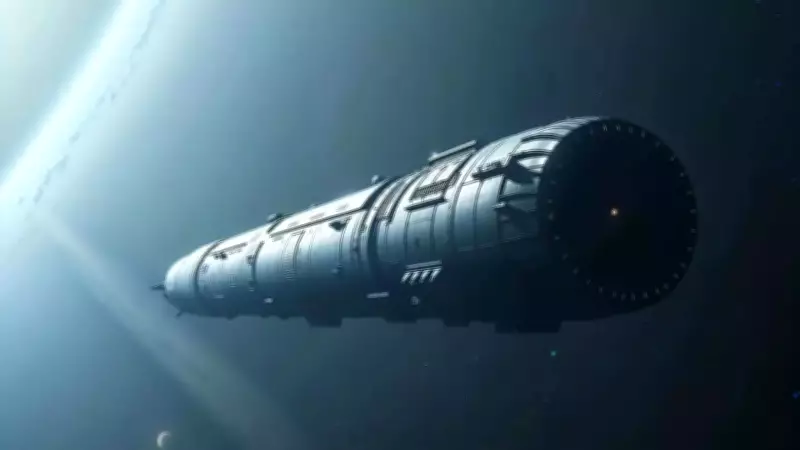
The proposed interstellar spacecraft named Chrysalis represents one of humanity's most ambitious space exploration concepts ever conceived. Designed to carry 1,000 people on a one-way journey into interstellar space, this revolutionary vessel was proposed as part of the prestigious Project Hyperion Design Competition. Unlike conventional spacecraft that accommodate only a handful of astronauts for months or years, Chrysalis is engineered as a true generational vessel capable of sustaining human life for centuries.
A Self-Sustaining Habitat for Multi-Generational Survival
The fundamental concept behind Chrysalis involves creating a completely integrated, closed-loop system where food, oxygen, and waste management systems work in perfect harmony with the habitat. The spacecraft's interior features sophisticated vertical farming systems that utilize controlled lighting to produce food for the crew. Remarkably, the carbon dioxide generated by the inhabitants is recycled as essential nutrients for these crops, creating a stable, self-regulating ecosystem.
Within the habitat, social areas designed as green zones provide psychological benefits while contributing to the ecological balance. This comprehensive approach ensures that multiple generations of humans could survive and thrive during the approximately 250-year journey that Chrysalis is designed to undertake.

Artificial Gravity Through Revolutionary Engineering
The most innovative aspect of Chrysalis is its rotating ring structure that generates artificial gravity through centrifugal force. With an impressive 36-mile diameter, this massive habitat rotates at a carefully calculated rate that minimizes motion sickness while providing gravitational conditions essential for human health. The substantial size significantly reduces the gravitational differential between inhabitants' heads and feet—a common problem with smaller rotating spacecraft designs.
This artificial gravity system represents a critical breakthrough for long-duration space missions, as it addresses the detrimental health effects of prolonged weightlessness that have plagued astronauts on shorter missions.
Advanced Radiation Protection and Space Construction
Living beyond Earth's protective atmosphere and magnetic fields exposes humans to dangerous high-energy radiation. Chrysalis addresses this fundamental challenge through sophisticated shielding systems. Water reservoirs strategically positioned along the outer layers absorb harmful radiation, while advanced composite materials in the hull provide exceptional temperature control.
The spacecraft's design enables it to withstand extreme temperature fluctuations inherent to space environments, where one side may experience intense heat while the opposite side faces near-absolute-zero conditions. This thermal regulation capability is essential for protecting both the vessel's systems and its human inhabitants.
Given Chrysalis's enormous scale, traditional Earth-based construction would be impractical. Instead, the proposed building method involves assembly at a Lagrange point within the Earth-Moon system. These points of balanced gravity allow structures to remain stable without constant propulsion. Once construction is complete, specialized propulsion systems would initiate the vessel's departure from our Solar System—a method far more efficient than conventional approaches.
Governance, Education, and Autonomous Systems for Deep Space
The survival of a human population across multiple generations requires careful planning beyond mere physical survival. Chrysalis incorporates comprehensive provisions for education, research, and community governance. Children born aboard the spacecraft would receive specialized training to eventually assume responsibility for maintaining critical systems.
Autonomous robotic systems would continuously monitor the hull's condition, repair mechanical components, and regulate environmental stability to minimize risks during the deep space mission. These systems represent a crucial safety net for the human population undertaking this unprecedented journey.

The Future of Interstellar Travel and Human Colonization
The Chrysalis spacecraft concept exemplifies the extraordinary possibilities for generational vessels designed for interstellar travel. This visionary design balances technological innovation with ecological sustainability and social considerations essential for human survival beyond our Solar System. While currently conceptual, Chrysalis provides invaluable insights into the needs, challenges, and potential solutions for creating self-sustaining spacecraft capable of supporting humanity on journeys spanning centuries.
This ambitious project pushes the boundaries of space exploration technology while addressing fundamental questions about human society's ability to sustain itself during prolonged isolation in deep space. As humanity contemplates its future among the stars, concepts like Chrysalis illuminate both the tremendous challenges and extraordinary possibilities that await us in the cosmic frontier.