In the late 19th century, photography was a cumbersome process involving large glass plates, darkroom tents, and hazardous chemicals, limiting it to professionals and affluent amateurs. This changed thanks to American inventor George Eastman, who simplified photography for ordinary users through a series of innovations, including the invention of roll film and the Kodak camera.
Dry Plates: The First Step
Before Eastman, photographers used the wet plate method, which required chemical coating and developing on-site before the liquid dried. This forced them to carry a darkroom everywhere. The invention of dry-plate negatives revolutionized this by moving chemistry from the field to factories. According to an online exhibition by Cornell University, by 1878, photographers could buy ready-made plates and expose them at their convenience, making the process more reliable by eliminating the unpredictability of on-site chemical mixing. Eastman saw this as a platform for further improvement.
Mechanizing Photography
Eastman initially sought to improve the dry-plate system. The Lemelson-MIT historical biography notes that he became dedicated to dry-plate emulsion starting in 1877. In 1879, he patented a mechanism for mechanical coating of plates, switching from manual to a controlled, repeatable production cycle. This experience taught him how to work with photographic materials on a large scale, laying the groundwork for his next experiment: replacing heavy glass plates.

Transition to Flexible Roll Film
Glass plates, though stable, were bulky and heavy. Eastman understood that portability depended on the recording material. In 1885, his efforts led to a paper-based film on a roll, allowing users to load a single roll with many exposures instead of individual glass plates.
The Emergence of the Kodak Moment
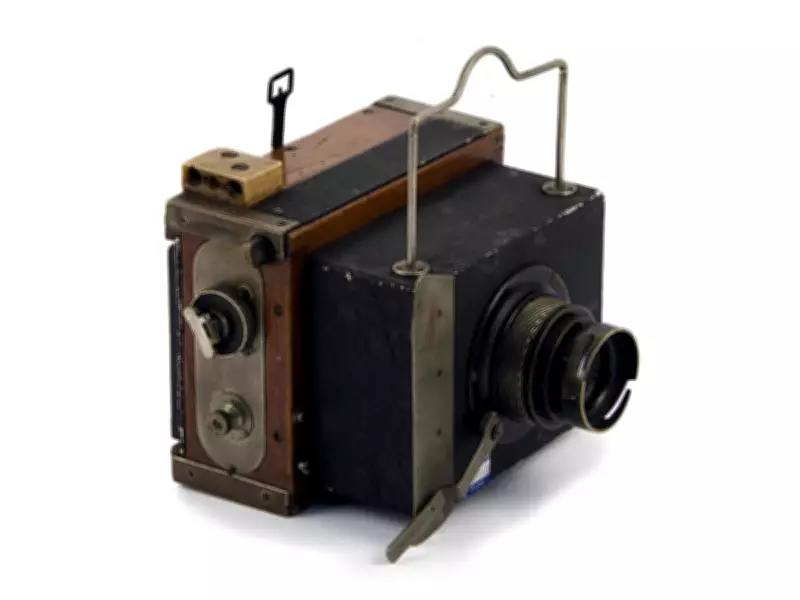
By 1888, Eastman packaged his invention into the Kodak Camera, a commercially available product that brought film technology into everyday use. The camera came loaded with a roll of film capable of taking 100 photographs. After use, the entire camera was sent back to the factory for processing and reloading. Eastman's insight was clear: convenience mattered as much as technological innovation. By making photography easy, he turned it into a common practice rather than a specialized skill.