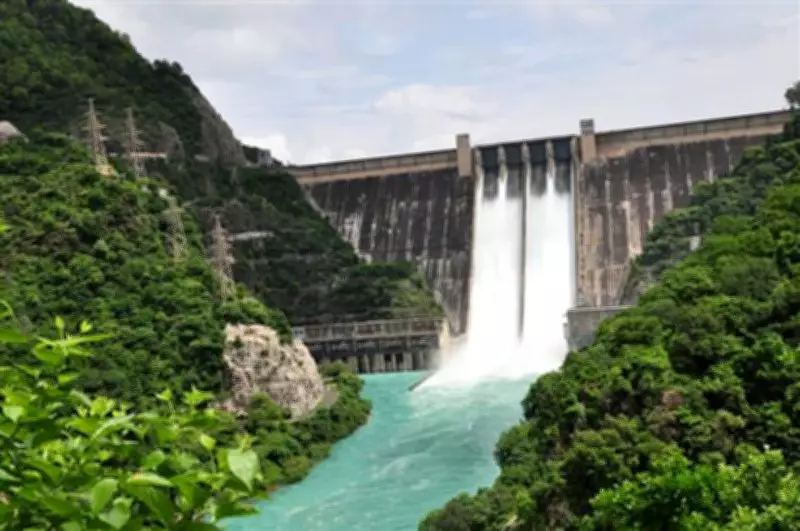
A new study from the Indian Institute of Technology (IIT) Ropar has challenged the Bhakra Beas Management Board's (BBMB) long-standing estimates of silt accumulation in the Gobind Sagar reservoir of the Bhakra Dam. The research, led by Dr Reet Tiwari, indicates that the reservoir's storage capacity has been reduced by only 38% overall, compared to the BBMB's claim of 47%. The findings come at a critical time as the BBMB moves forward with its first large-scale desilting operation since the dam became operational in 1959.
Capacity Loss Estimates Divergence
According to the report accessed by The Tribune, the IIT team assessed the overall capacity loss of the reservoir at 38%, substantially lower than the 47% estimated by the BBMB. The study also found that the loss of live storage is 13%, markedly below the BBMB's 19% estimate. Similarly, the loss of gross storage was pegged at 19% by IIT Ropar, compared to the board's 26% calculation.
The annual silt inflow into the reservoir also shows a significant discrepancy. While the BBMB estimated that the reservoir receives about 39 million cubic metres (MCM) of silt annually, the IIT scientists assessed the inflow at 31 MCM. This figure is even lower than the reservoir's original design estimate of 33.61 MCM per year, indicating that sedimentation may be occurring at a slower rate than historically assumed.

Advanced Survey Techniques Used
Senior BBMB officials, speaking on condition of anonymity, attributed the variation in findings to the advanced survey techniques adopted by the IIT team. The institute used modern bathymetric surveys, drone-based mapping, and much denser cross-sectional measurements to assess sediment deposits. The IIT scientists conducted surveys at intervals of about 30 metres, enabling them to capture finer variations in the reservoir bed. In contrast, the BBMB's conventional surveys relied on cross sections spaced approximately 610 metres apart. The use of advanced technology and higher resolution mapping produced more precise estimates of sediment accumulation, according to the officials.
Implications for Desilting Plans
The contrasting findings have emerged at a crucial stage, with the BBMB proceeding with an ambitious plan to desilt the Gobind Sagar reservoir. The board has already issued an Expression of Interest (EoI) for mechanical desilting at two locations: Lunu in Bilaspur district and Seer Khad in Una district of Himachal Pradesh. Officials estimate that nearly 150 MCM of silt is available for excavation at each site. The contractor executing the work will be responsible for obtaining environmental clearances and other statutory approvals.
Himachal Pradesh has agreed to the proposal and will receive a royalty of approximately Rs 150 per tonne on the extracted material. If the excavated silt yields higher commercial value, additional revenue may be shared among the BBMB partner states—Punjab, Haryana, and Rajasthan. This revenue-sharing mechanism aims to incentivize the desilting effort, which is expected to enhance the reservoir's storage capacity and extend the dam's operational life.
Importance of Sediment Management
Despite the differing estimates of storage loss, experts agree that sediment management has become increasingly important for maintaining the long-term efficiency of the Bhakra project. The dam remains one of northern India's most critical sources of irrigation water, hydropower generation, and flood moderation. Regular monitoring and advanced surveying techniques, such as those employed by IIT Ropar, will be essential for accurate assessment and effective management of sedimentation. The study underscores the need for adopting modern technologies in reservoir management to ensure sustainable water resource utilization.